Last updated October 31, 2026
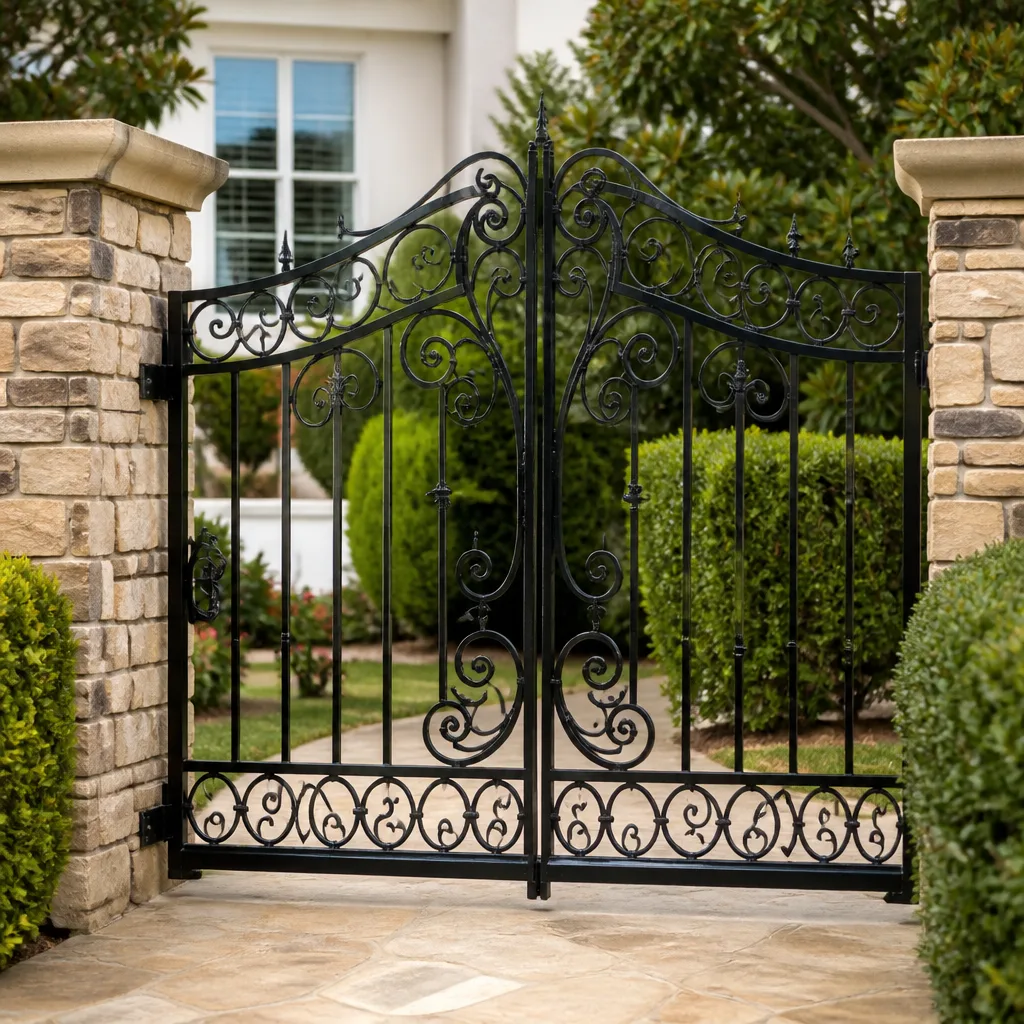 Wrought iron
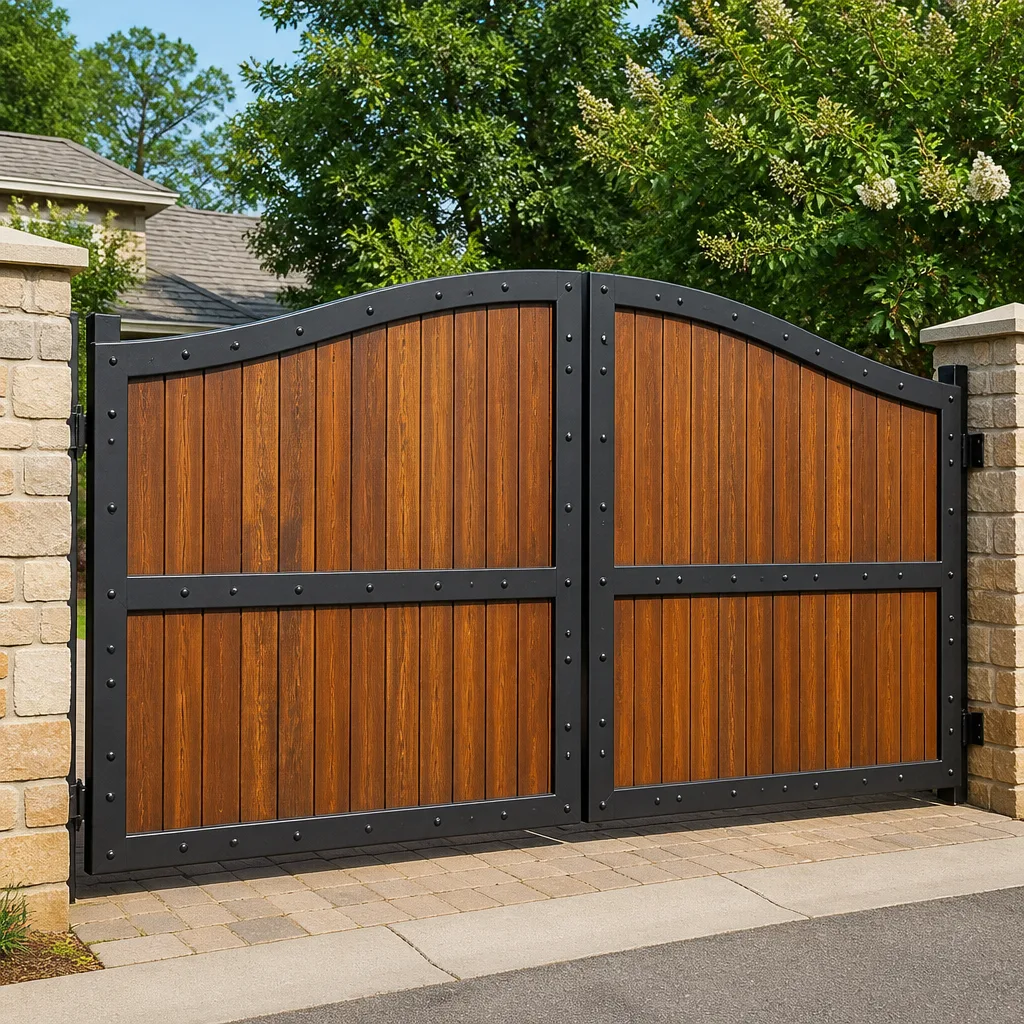 Wood & steel frame
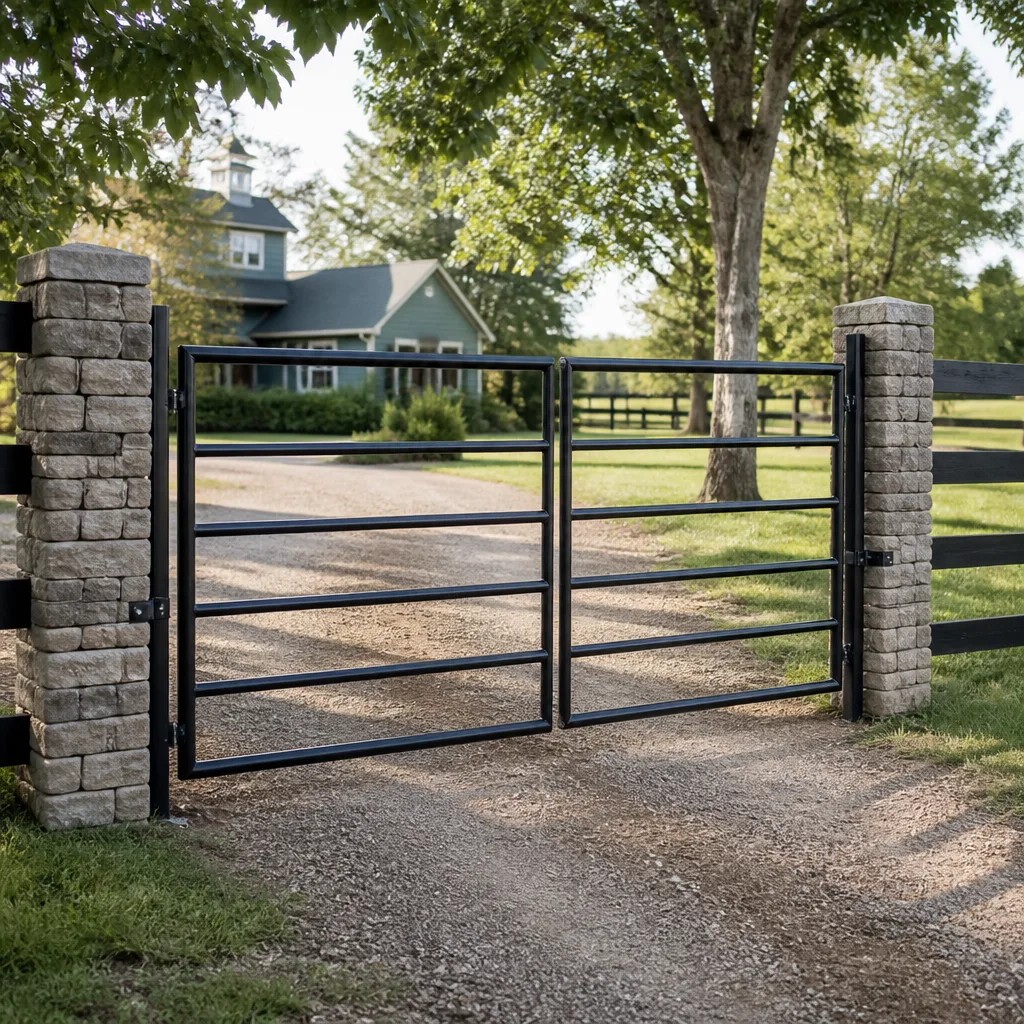 Farm & ranch
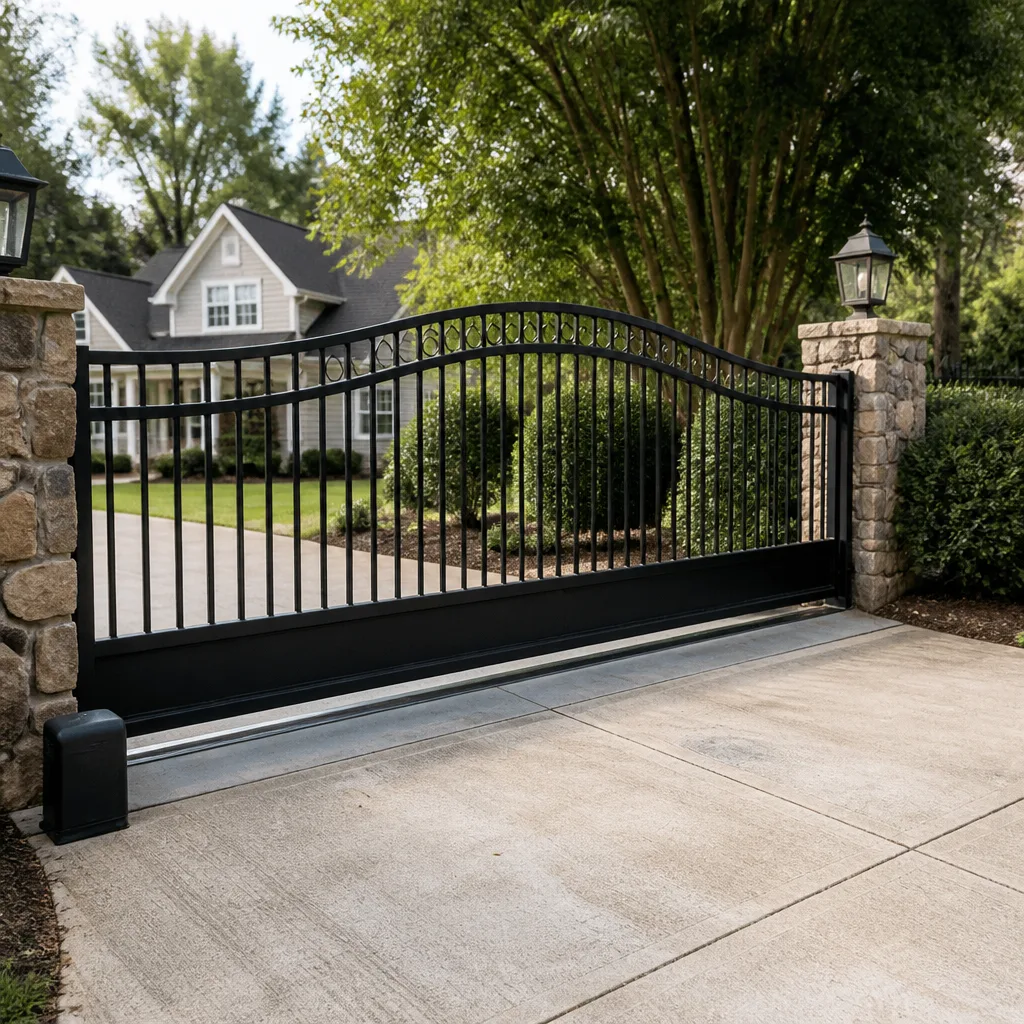 Sliding driveway gates
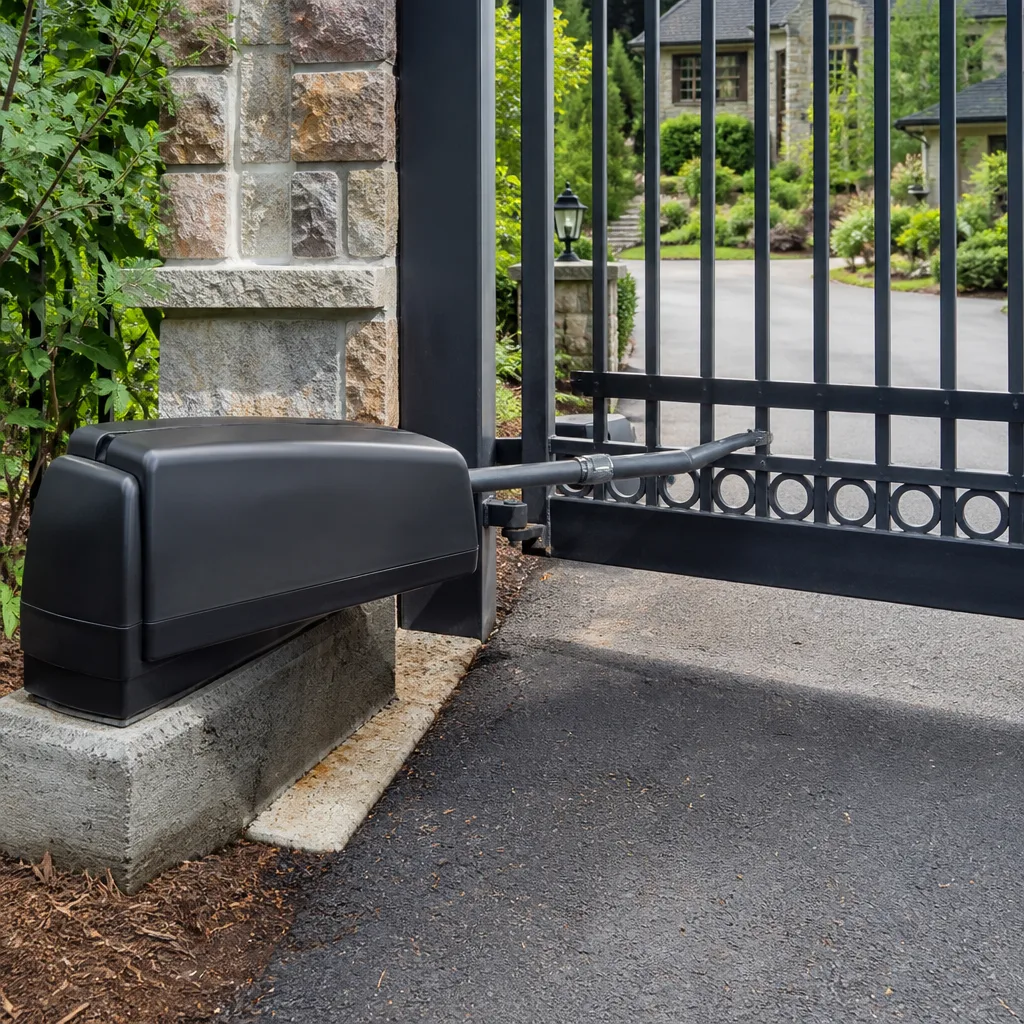 LiftMaster operators
Free on-site gate assessment - hinges, posts, and your LiftMaster or Nice gate operator checked before anything is quoted
The assessment is free and the quote is the invoice.
Get your free estimateThe Complete Guide to Gate Repair in Corona
A gate that slams shut on its own isn’t an opener problem. It’s almost always a hinge or grade-settling issue, and replacing the motor won’t stop it. Corona’s clay-heavy soil makes this misdiagnosis more common here than in most Southern California cities, because expansive clay shifts with every wet-dry cycle and drags gate posts out of alignment. This guide maps every common gate failure in Corona back to one of five root causes so you fix the problem once, not four times.
Quick Answer
Gate repair in Corona typically means diagnosing which of five root causes is actually failing: foundation movement, worn hardware, operator failure, electrical faults, or structural fatigue. Most repeat repairs happen because a contractor replaced a symptom (like a burned-out motor) without addressing the cause (like a post that shifted out of plumb). A gate specialist who works on your specific brand and understands Corona’s expansive clay soil can usually diagnose and fix the problem in one visit.
Styles & brands we work with
Table of Contents
- The Five Root Causes of Gate Failure in Corona
- Why Corona’s Soil and Heat Cycles Are Harder on Gates
- Symptom vs. Cause: The Misdiagnosis Problem
- The Repair Decision Tree: Fix Now vs. Watch
- Why the Brand on Your Gate Matters
- What a Proper Repair Scope of Work Looks Like
- Electric vs. Mechanical Gate Repair: What’s Actually Wrong
- Common Mistakes to Avoid
- When to Call a Professional
- Frequently Asked Questions
The Five Root Causes of Gate Failure in Corona
Every gate failure we’ve diagnosed in Corona falls into one of five categories. Knowing which one you’re dealing with changes everything about the repair approach, the cost, and whether the fix will hold.
1. Foundation movement. The gate post shifts out of plumb because the soil beneath it expanded, contracted, or eroded. Corona’s clay-heavy soil is notorious for this. When a post tilts even one degree on a 12-foot gate, the latch no longer lines up, the gate drags on the ground, and the opener strains against a load it was never designed to handle. The opener burns out. The gate sags. But the root cause is in the ground, not in the motor.
2. Hardware wear. Hinges, rollers, latch pins, and track components wear down from daily use. On a gate that cycles 20 times a day, that’s over 7,000 cycles a year. A worn hinge pin allows the gate leaf to drop, which throws off the latch alignment and loads the opener unevenly. Hardware failures are the most common “repair” we do on manual gates, and they’re often caught late because the gate still works, it just works poorly.
3. Operator failure. The motor, gearbox, or drive mechanism inside the opener fails. This is what most people think of when they say “gate repair.” But here’s the key: operator failure is rarely the initiating event. In our experience in Corona, roughly two-thirds of opener replacements we perform were preceded by a mechanical problem that overloaded the operator until it failed. Replace the opener without fixing the mechanical issue and you’ll replace it again in 18 months.
4. Electrical faults. Control boards fry, loop detectors stop detecting, safety photo-eyes get knocked out of alignment, limit switches fail, and wire connections corrode. Corona’s heat doesn’t help. Control boards mounted in metal enclosures that bake in direct sun all summer can exceed their rated operating temperature, shortening component life. Electrical faults are where generalists struggle most, because reading a circuit diagram for a FAAC board isn’t the same as swapping a light switch.
5. Structural fatigue. The gate frame itself cracks, rusts, or warps. Welds fail at stress points. The bottom rail rusts through where sprinkler overspray hits it every morning. Structural problems are the most expensive to fix properly and the most frequently patched over with cheap fixes that fail. A cracked weld re-welded without addressing the stress concentration will crack again in the same spot.
Most gate problems in Corona are a chain reaction across categories. The post shifts, the gate drags, the opener strains, the board overheats. Fix the post and the rest often resolves. That’s the difference between a one-visit repair and a recurring headache.
Why Corona’s Soil and Heat Cycles Are Harder on Gates
Corona sits on alluvial fans and valley fill that include significant clay content in many neighborhoods. Clay soil expands when wet and shrinks when dry. The swing can be dramatic: a cubic yard of expansive clay can change volume by 10% or more between saturated and bone-dry states.
What does that mean for your gate? Your gate post is a lever embedded in that soil. When the soil swells after winter rains, it pushes the post upward and outward. When it dries out in a Corona summer, it contracts and leaves a gap around the post base, allowing the post to lean under the weight of the gate. Repeat this cycle for a decade and even a well-installed post will drift out of alignment.
Heat is the second factor. Corona routinely sees summer temperatures above 100 degrees Fahrenheit, and gate control boards inside metal boxes can reach 130 degrees or more on a hot afternoon with direct sun exposure. Electronics degrade faster at elevated temperatures. Capacitors dry out. Solder joints fatigue. The expansion and contraction of metal gate frames from day-night temperature swings also works on welds and fasteners over time.
Then there are the Santa Ana winds. Gates are giant sails. A 60-mph gust against a solid-panel gate exerts enormous force on the hinges, the latch, and the opener’s gearbox. If your gate already has a slight misalignment, a Santa Ana event is when it becomes a visible failure.
We’ve also seen a pattern in Corona’s foothill communities, like the neighborhoods around Eagle Glen and Sierra del Oro, where grades are steeper and drainage patterns send water toward gate foundations in ways that flat-lot homes never experience. A gate at the bottom of a slope gets more water at its post bases, which compounds the clay expansion problem.
Symptom vs. Cause: The Misdiagnosis Problem
The single most expensive mistake in gate repair is treating the symptom instead of the cause. Here’s what that looks like in practice.
A homeowner in Corona notices their automated gate opens slowly and sometimes reverses partway. They call an electrician. The electrician checks the motor, finds it drawing higher amps than rated, and recommends replacing the opener. The quote is $2,800. The opener gets replaced. The gate works better for a few months. Then the same symptoms return.
What actually happened: The gate post had shifted two degrees out of plumb, which made the gate drag on the leading edge, which made the motor work harder, which caused the slow operation and amp spike. The new motor worked better for a while because it had more torque than the tired old one, but the underlying drag is still there, and the new motor is now on the same path to early failure.
We see variations of this every week. A welder re-welds a cracked hinge bracket without checking whether the post itself has moved. A handyman replaces a circuit board without asking why the board failed. A general contractor patches a sagging gate by adding a wheel, which transfers load to the wrong point and eventually damages the frame.
The difference with a gate specialist is that the first question is always: Why did this component fail? Not What component failed? The failed component is the end of a chain of events. A specialist walks the chain backward. That’s how a repair becomes a one-visit fix instead of a recurring invoice.
For more on how we approach diagnosis for automated systems specifically, see our guide on Electric Gate Repair in Corona.
The Repair Decision Tree: Fix Now vs. Watch
Not every gate problem demands immediate attention. Some issues compound quickly and get dramatically more expensive if deferred. Others are cosmetic or slow-moving and can be safely watched for months. Here’s how to categorize what you’re seeing.
Fix immediately (compounding problems)
- A gate that won’t close or latch securely. This is a security problem first and a mechanical problem second. An unlatched gate defeats the purpose of having a gate.
- A gate that drags on the ground or scrapes the track. Every cycle adds more wear to the drive system. A $200 hinge adjustment deferred becomes a $2,000 opener replacement in six months.
- An opener that makes grinding, clicking, or straining sounds. Metal shavings in a gearbox don’t heal themselves. The longer it runs damaged, the more parts get destroyed.
- A safety sensor or photo-eye that’s not working. A gate that doesn’t reverse when it encounters an obstruction is a serious safety hazard, especially on a property with children or pets.
- Visible cracks in welds or gate frame members. Structural cracks propagate. A small crack in a bottom rail becomes a snapped gate under wind load.
Monitor and address at your next service (watchable problems)
- Slight sag that doesn’t affect latching or dragging. Note it, watch for progression, and mention it during your next service call.
- Cosmetic rust on non-structural components. Treat it when convenient. Structural rust is a different category entirely.
- Opener that runs slower in cold weather. Hydraulic operators in particular can be temperature-sensitive. If it operates normally above 60 degrees, it’s likely within spec.
- Intermittent nuisance tripping of the safety sensor. Clean the lenses and check for spider webs first. If it recurs often, then schedule a visit.
The decision tree matters because Corona’s climate punishes deferred repairs. A small foundation shift that’s caught early can often be corrected by re-seating or shimming a post. The same shift caught a year later, after the opener has been grinding against it the whole time, means a post reset and an opener replacement. Early intervention is always cheaper.
Why the Brand on Your Gate Matters
No two gate systems are the same, even when they look identical from the street. The brand on the motor, the brand of the control board, and the generation of the hardware determine how the system fails, how to diagnose it, and what parts are compatible.
We work on the brand you already have. That includes everything from DIY-grade systems like Mighty Mule and Ghost Controls to premium European equipment like FAAC and BFT to commercial-grade operators from DoorKing, LiftMaster, Linear, Viking, and Elite. The repair approach for a FAAC hydraulic operator is completely different from the approach for a Viking swing arm on a commercial property, and both are different from a Mighty Mule on a ranch gate in the hills above Corona.
Here’s why that matters in practice:
- Diagnosis speed. When we recognize a BFT control board’s failure pattern on sight, we spend 20 minutes confirming what a generalist spends two hours guessing at.
- Parts compatibility. European brands often use metric hardware and proprietary connectors. An off-the-shelf part from a hardware store doesn’t fit, and forcing it creates a new problem.
- Safety circuits. FAAC and BFT systems in particular have layered safety logic that interacts with the control board in specific ways. Bypassing a safety input to “make it work” creates a liability on your property.
- Adjustment parameters. Force limits, slowdown zones, and obstruction sensitivity are set differently on a Viking commercial operator than on a Linear residential swing. Setting them wrong means an unsafe gate.
The point isn’t brand snobbery. It’s that a specialist who has serviced hundreds of units across nine brands knows the failure modes without having to learn them on your gate. Whether it’s a Mighty Mule on a ranch gate or a FAAC on an estate entrance in Corona, the goal is the same: gate repair in Corona that’s diagnosed and fixed in one visit.
What a Proper Repair Scope of Work Looks Like
When you get a quote for gate repair in Corona, the scope of work tells you everything about whether the contractor understands the job. Here’s what a complete scope includes, and what a corner-cutting quote leaves out.
A complete repair scope includes:
- Diagnosis of the root cause. Not just “replace opener.” It should say why the opener failed and what’s being done to prevent recurrence.
- Post and alignment check. If the repair doesn’t mention checking the posts for plumb and the gate for level, the contractor hasn’t addressed the most common root cause in Corona.
- Full parts list with brands. “New control board” is vague. “New FAAC 455D control board” is a scope. Vague parts language means you’ll get whatever part is cheapest at the supplier that day.
- Safety system verification. After any repair, the photo-eyes, contact edges, and obstruction reversal should be tested and confirmed working. If the scope doesn’t include this, the contractor is leaving your gate in a potentially unsafe state.
- Labor and materials separated. Not always essential, but it makes the quote easier to evaluate.
- Warranty terms in writing. What’s covered, for how long, and what voids the coverage.
Red flags in a gate repair quote:
- No on-site visit before the quote. A gate can’t be quoted accurately from photos. If they’re quoting blind, they’re guessing.
- Line items for parts you don’t recognize without explanation. A good contractor will walk you through every line.
- No mention of adjusting anything except replacing parts. Sometimes the fix is an adjustment, not a replacement. A quote that’s all replacement and no adjustment suggests a parts-swapper, not a diagnostician.
- No safety verification step. On an automated gate, this should be non-negotiable.
- Pressure for same-day signature. Gate repairs are rarely so urgent that you can’t take 24 hours to compare. A reputable contractor will hold a quote for a reasonable period.
Electric vs. Mechanical Gate Repair: What’s Actually Wrong
Here’s a practical distinction that saves time and money: knowing whether your problem is electrical or mechanical before you call changes who you call and what you describe.
Mechanical problems involve anything that moves under physical force: hinges, rollers, tracks, weld joints, latch hardware, post alignment, and the gate frame itself. Signs of mechanical problems include sagging, dragging, scraping sounds, visible wear on hinges, a gate that binds partway through its travel, or a latch that no longer lines up with its receiver.
Electrical problems involve the control system and power delivery: the control board, transformer, battery backup, loop detectors, safety sensors, limit switches, remote controls, and wiring. Signs of electrical problems include a gate that won’t respond to the remote, opens but won’t close, closes but reopens immediately, makes clicking sounds but no movement, or works inconsistently with no mechanical explanation.
Here’s where it gets tricky: many electrical symptoms have mechanical causes. A gate that reverses partway through closing is often a safety sensor reading resistance from a binding hinge, not a sensor malfunction. A motor that hums but won’t move may have a mechanical jam, not an electrical fault. This is the exact kind of distinction that separates a gate specialist from a general contractor, and it’s why so many Corona homeowners end up replacing expensive electrical components that were never the actual problem.
From the motor to the hinge, the system works as one chain. Pull any link and the whole chain misbehaves. Our service area covers the full chain: mechanical repair, electric gate repair, and full gate installation in Corona when a system is beyond saving.
Common Mistakes to Avoid
- Replacing the opener without checking the posts. The most expensive mistake in gate repair. If the post has shifted, the new opener inherits the same load problem that killed the old one. Check the posts first, every time.
- Lubricating without cleaning first. Spraying lubricant over dirt and metal shavings creates a grinding paste that accelerates wear. Clean the track and hinge surfaces, then lubricate properly.
- Bypassing safety sensors. It’s tempting to jump a faulting photo-eye to make the gate work. Don’t. A gate that closes on a car, a child, or a pet is a liability you don’t want. Fix the sensor properly.
- Welding cracks without stress relief. A crack re-welded in place often cracks again adjacent to the repair because the original stress concentration wasn’t addressed. Proper structural repair reinforces, not just patches.
- Ignoring changing sounds. A gate that’s developing a problem almost always announces it: a new grinding sound, a slower travel, a slight hesitation. These are early warnings. Waiting until the gate stops moving entirely costs more.
- Choosing a contractor by price alone. The cheapest gate repair quote in Corona is often the most expensive repair you’ll buy twice. Compare scope, brand experience, and warranty terms, not just the bottom line.
- Not asking about brand familiarity. If the contractor has never serviced your brand of opener, they’re learning on your gate. That learning curve is billed in hours and mistakes.
When to Call a Professional
Call a gate professional when the problem involves the foundation, the opener, the electrical system, or any structural component of the gate frame. These are not handyman tasks. A gate that’s out of plumb needs to be re-seated and anchored properly, not propped up with a shim. An opener that’s misbehaving needs diagnostic equipment and brand-specific knowledge, not a multimeter guess. A cracked weld on a stress point needs reinforcement, not a bead run over the surface.
You should also call before you buy replacement parts. We’ve seen Corona homeowners order the wrong control board, the wrong hinge size, and the wrong opener model more times than we can count, because gate systems are not as interchangeable as they look. Baron Gate Repair offers free estimates in Corona, call (877) 752-1896. If you’re upgrading or replacing a system, see our gate installation page to understand the full process before you commit.
Frequently Asked Questions
Gate repair costs in Corona vary widely depending on the root cause: a hinge pin replacement typically runs $150 to $350, a control board replacement $400 to $1,200 depending on the brand, and a full opener replacement $1,500 to $4,000 for the operator plus labor. Foundation work and structural repairs add cost because they involve concrete, steel, and significant labor. Always get a scope of work in writing before approving anything. Call (877) 752-1896 for an exact quote on your gate, estimates are free.
Many mechanical repairs and common electrical fixes can be completed the same day if the necessary parts are on the truck or available locally. Brand-specific control boards and European components sometimes require ordering, which adds a few days. The fastest path is a proper diagnosis on the first visit rather than a guess that sends the wrong part to your house.
In Corona, heavy rain causes expansive clay soil to swell, which shifts gate posts and can throw the gate out of alignment, bind the latch, or trip a safety sensor. Water intrusion into control boxes, loop detectors, or underground wiring can also cause intermittent electrical failures. Both are common post-rain problems we see across Corona neighborhoods.
We service nine major gate brands across residential and commercial lines: LiftMaster, FAAC, BFT, Linear, Viking, Ghost Controls, DoorKing, Elite, and Mighty Mule. The repair approach differs by brand, which is why familiarity with your specific system matters more than a generic “we fix all gates” claim.
As a rule of thumb, if the cost of repairing the mechanical and structural issues exceeds 50 to 60 percent of a new gate installation, replacement starts making sense. The decision also depends on the age of the opener, the condition of the frame, and whether the posts are still sound. A proper assessment looks at the whole system, not just the part that failed.
Post shift from expansive clay soil is the most common underlying issue we encounter in Corona, though the most commonly reported symptom is an opener that works poorly or fails outright. The opener is rarely the root cause, which is why fixing the symptom without addressing the post leads to repeat failures.
The Bottom Line
Gate repair in Corona is a diagnostic problem more than a parts problem. The gate that won’t open, the opener that grinds, the latch that won’t catch, the sensor that trips: each is a symptom pointing back to one of five root causes: foundation movement, hardware wear, operator failure, electrical faults, or structural fatigue. Corona’s expansive clay soil and summer heat accelerate all five. The fix that lasts is the one that addresses the cause, uses the right brand-specific parts, and restores safe operation. That’s what a gate specialist does differently from a generalist. For more on our approach, start at the Baron Gate Repair home page or call us directly for a free estimate.
Written by the team at Baron Gate Repair, serving Corona since 2017.
See the difference
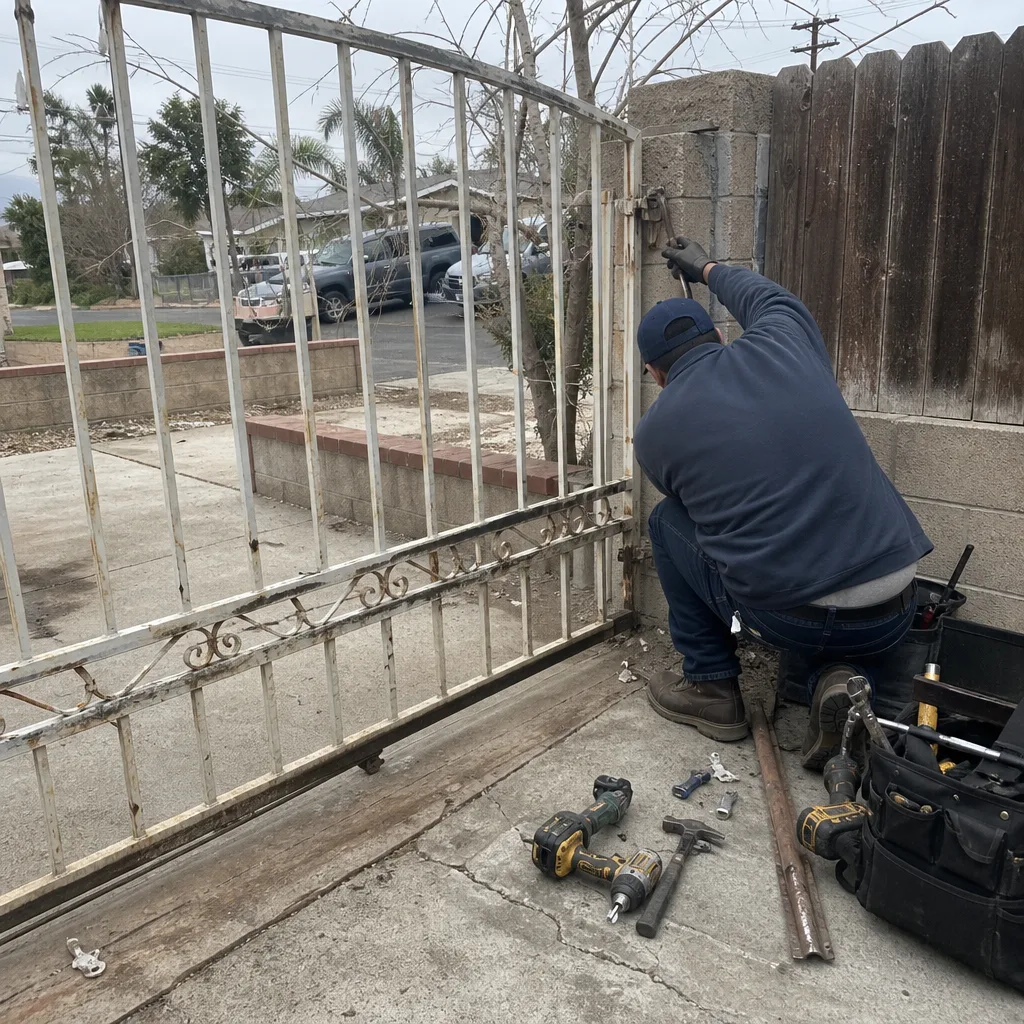 Before
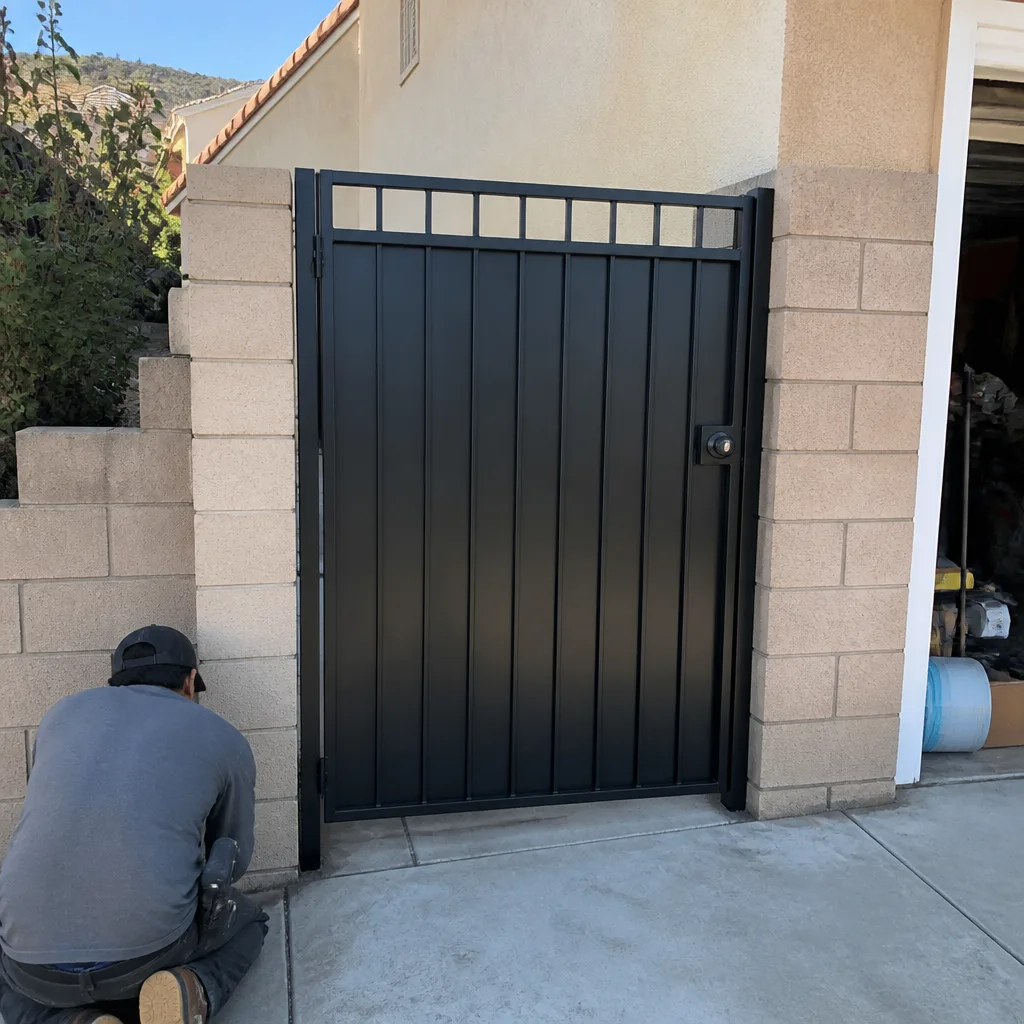 After
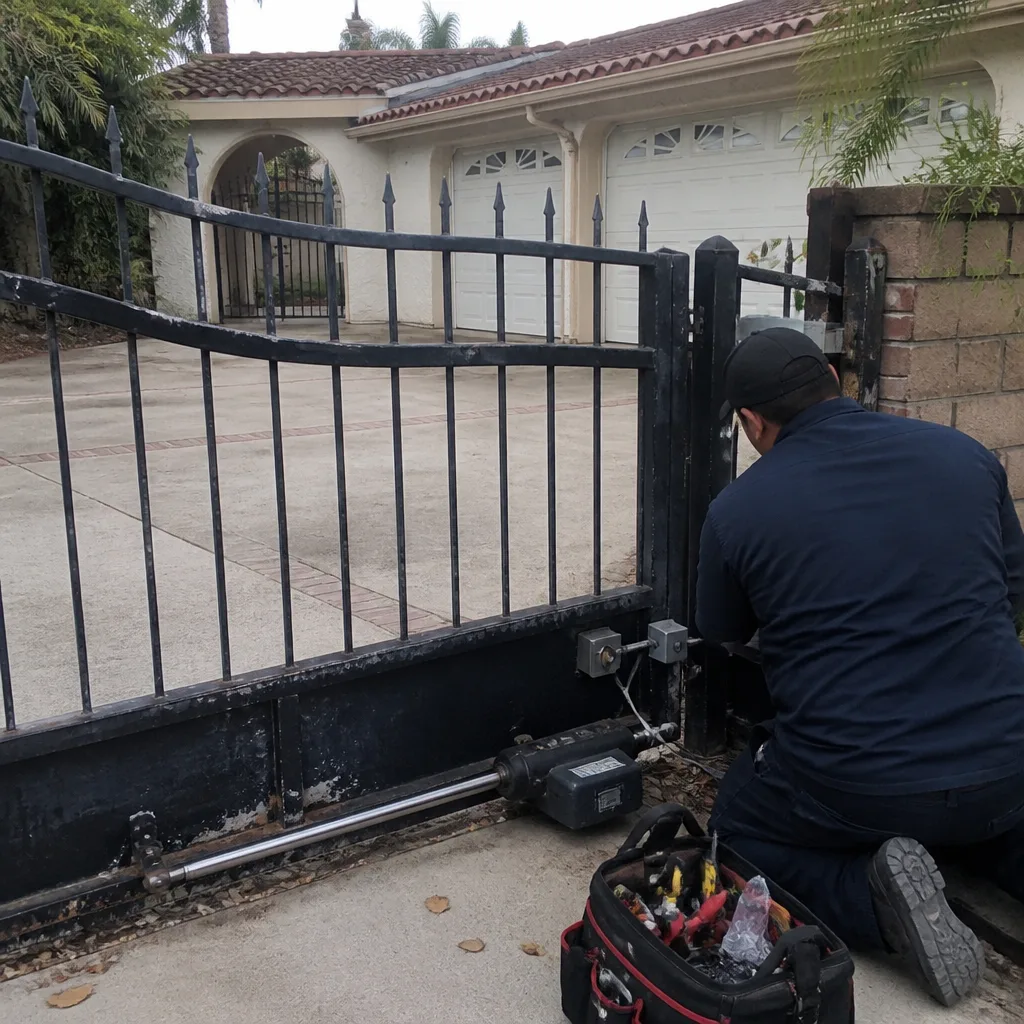 Before
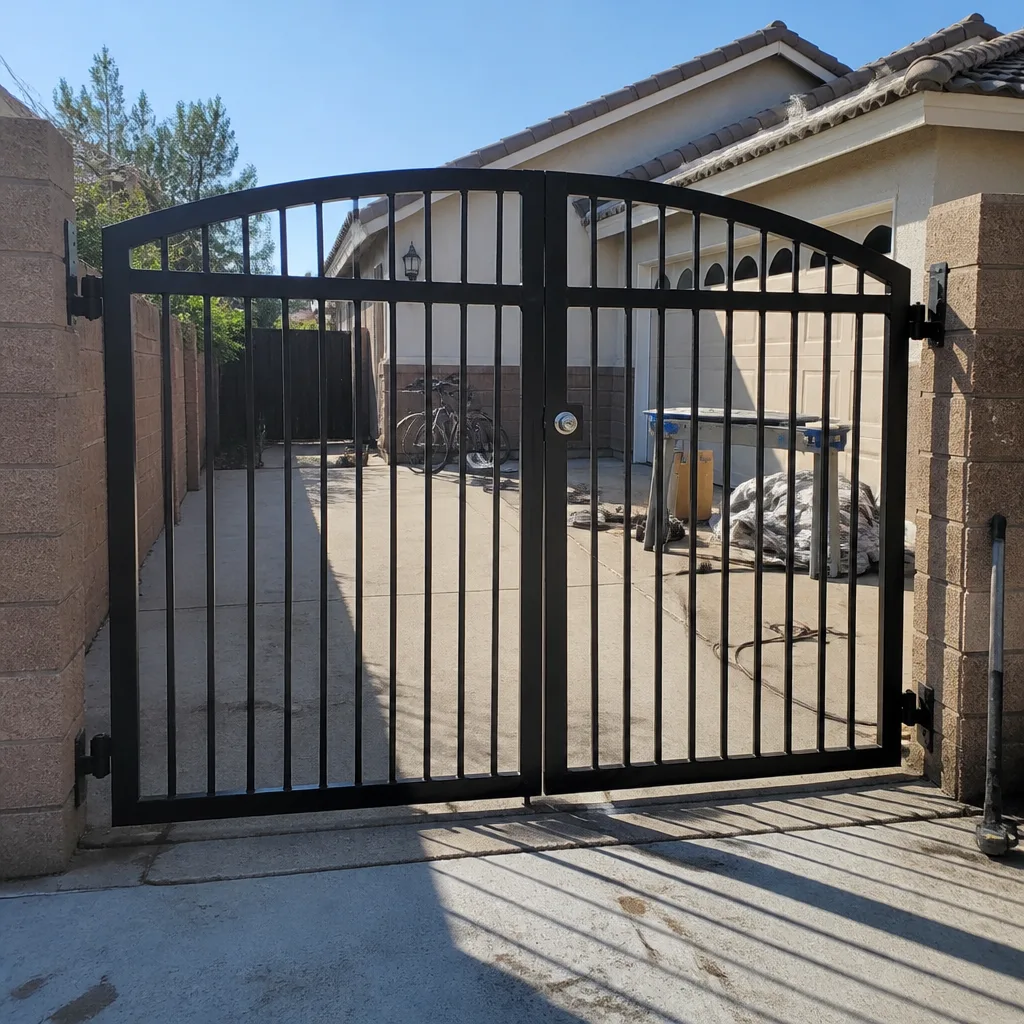 After
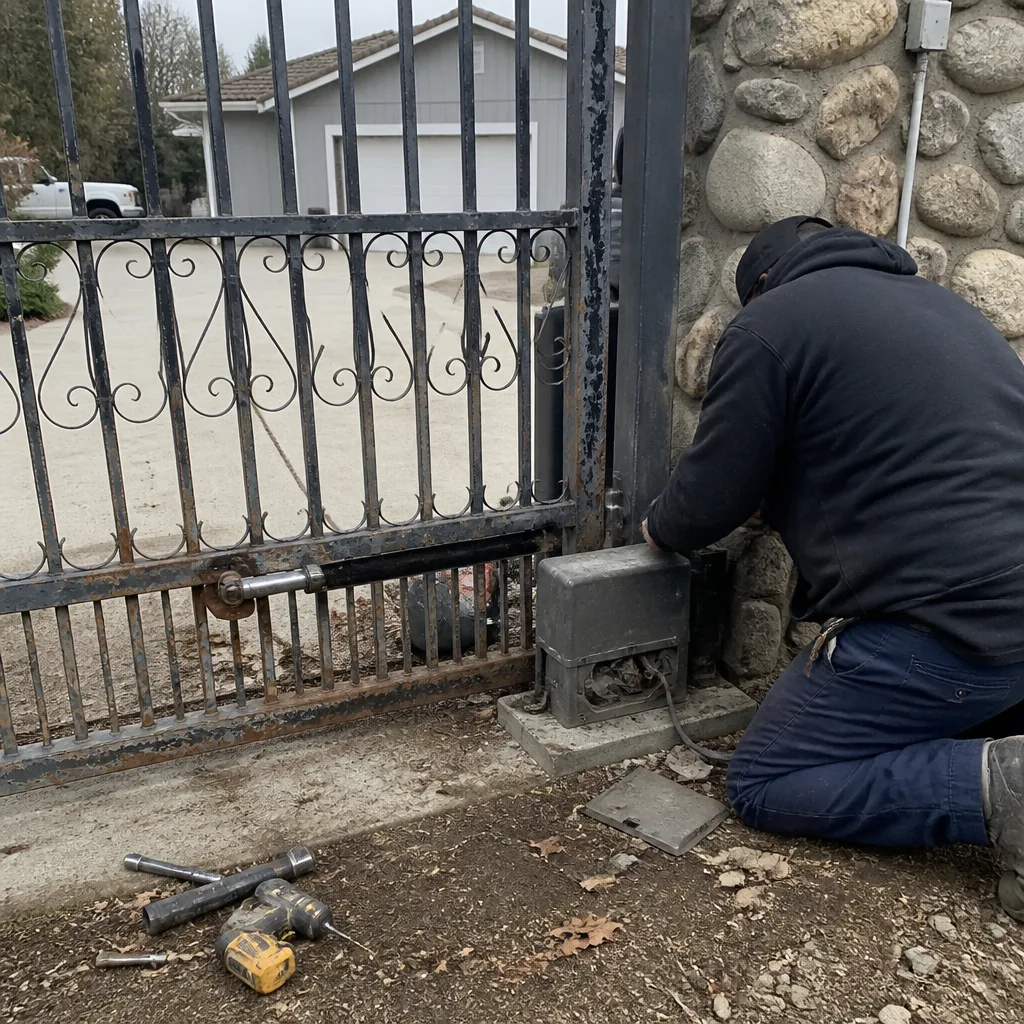 Before
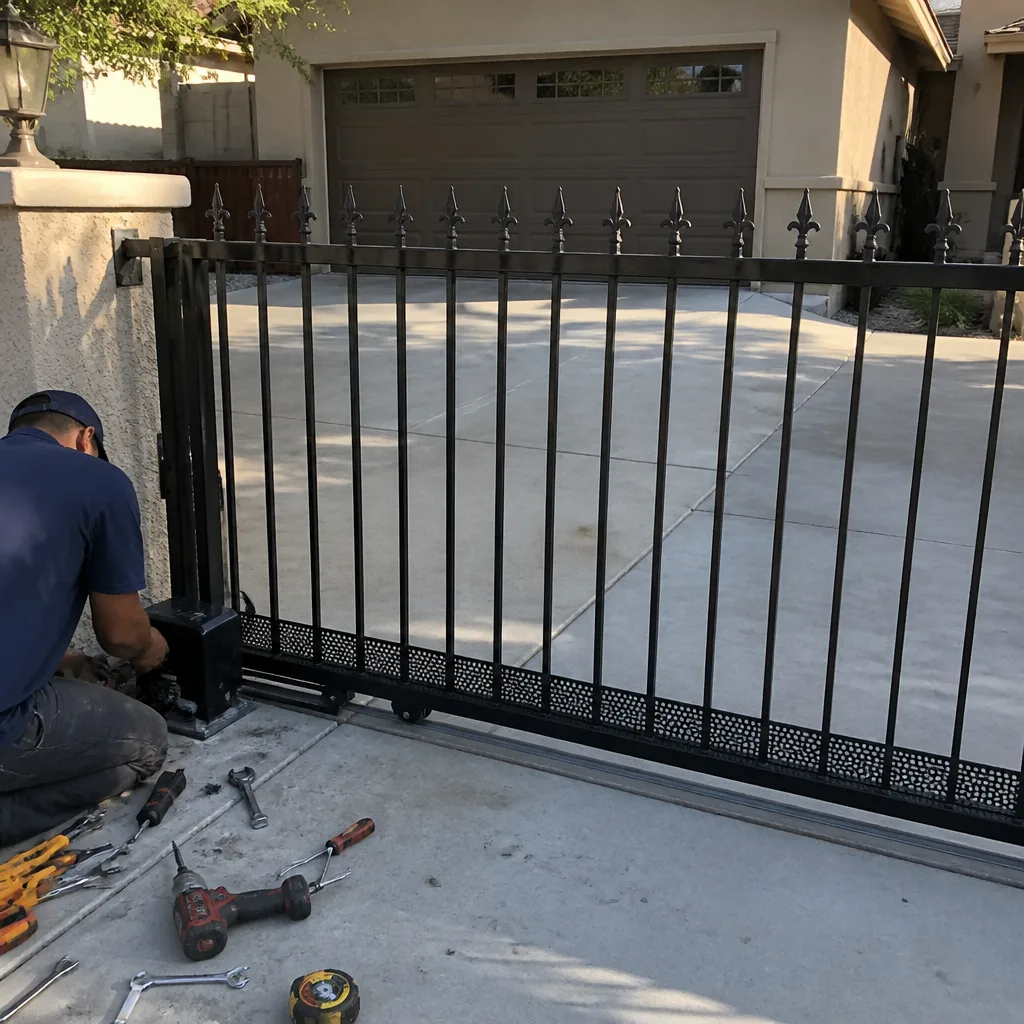 After