Last updated October 31, 2026
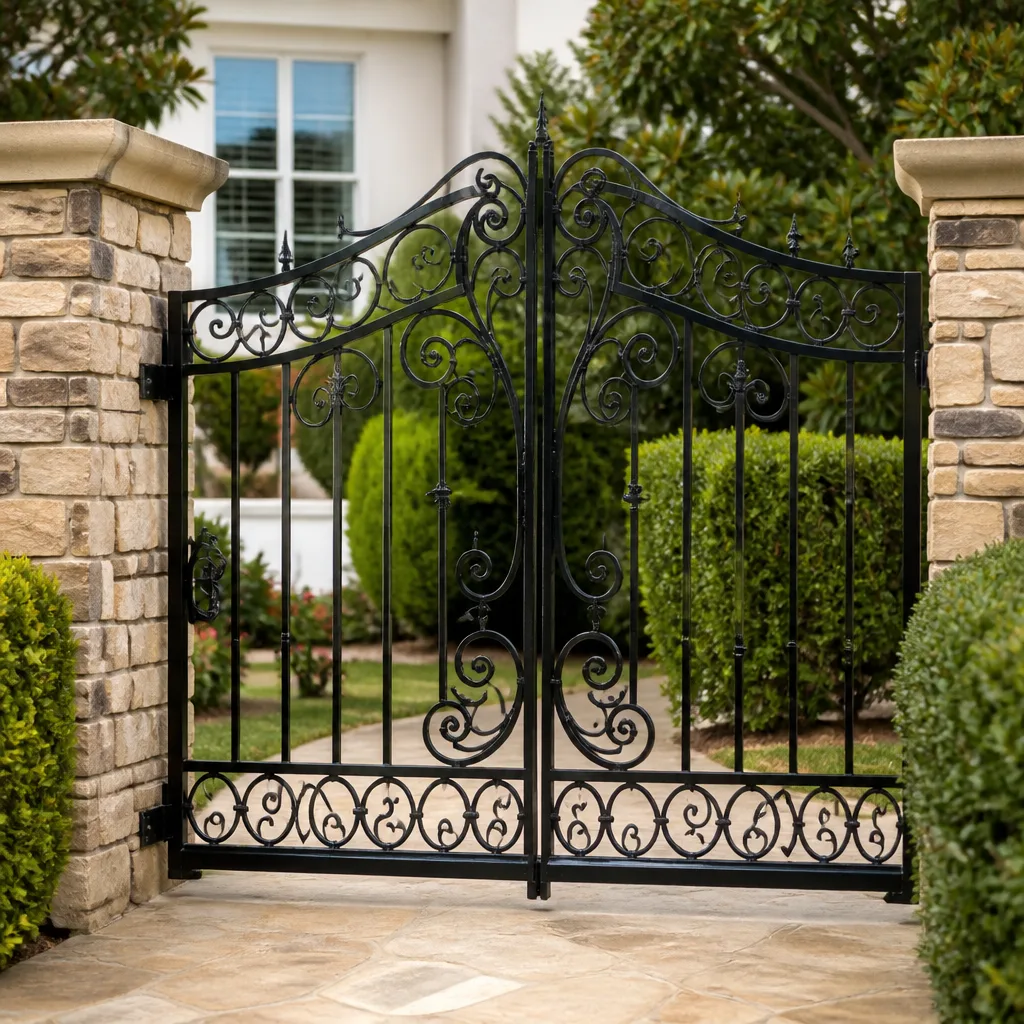 Wrought iron
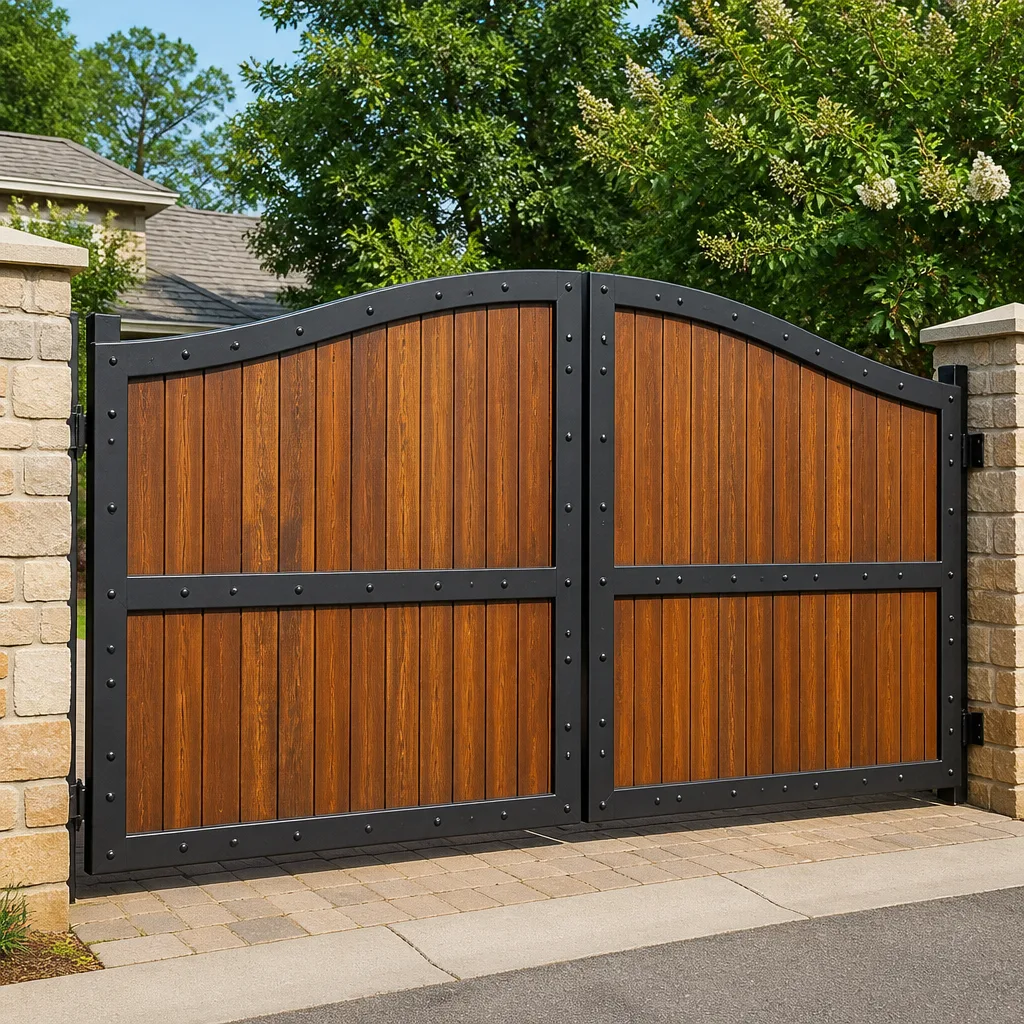 Wood & steel frame
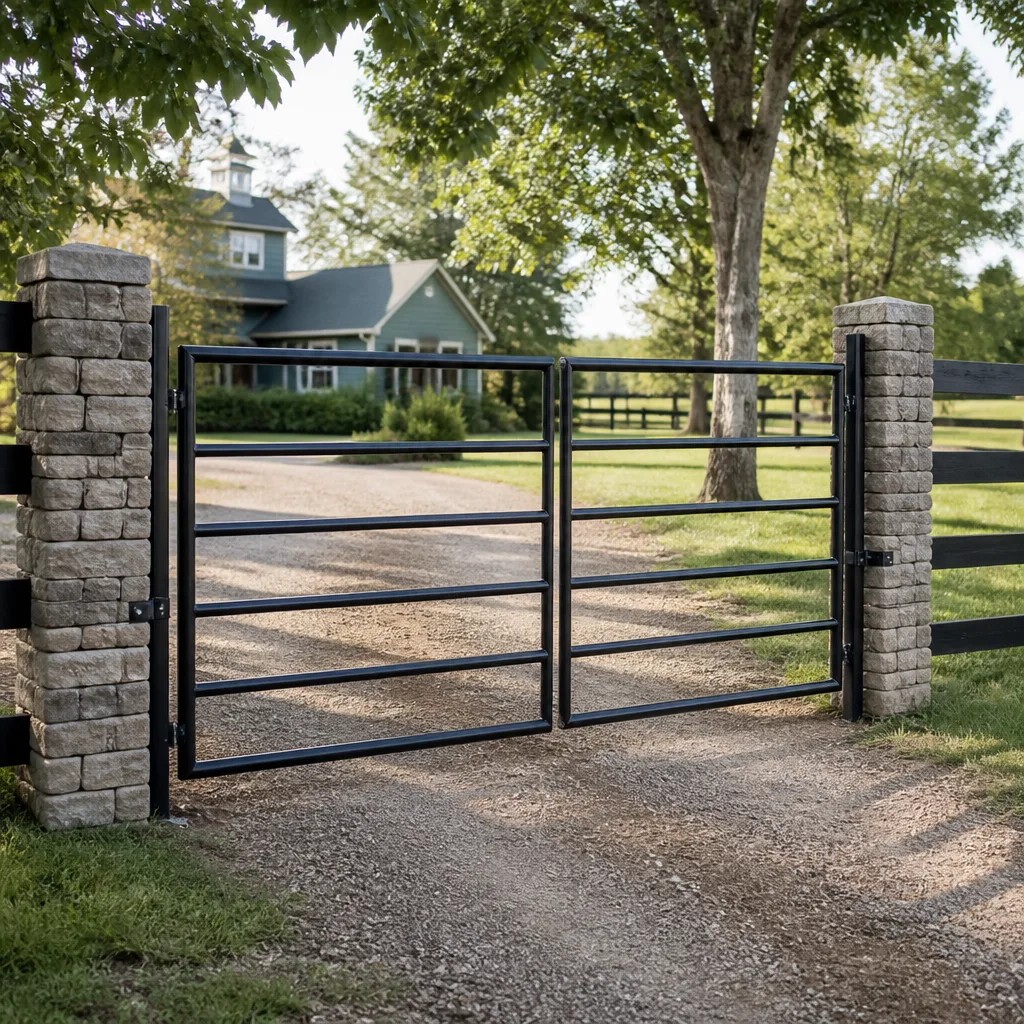 Farm & ranch
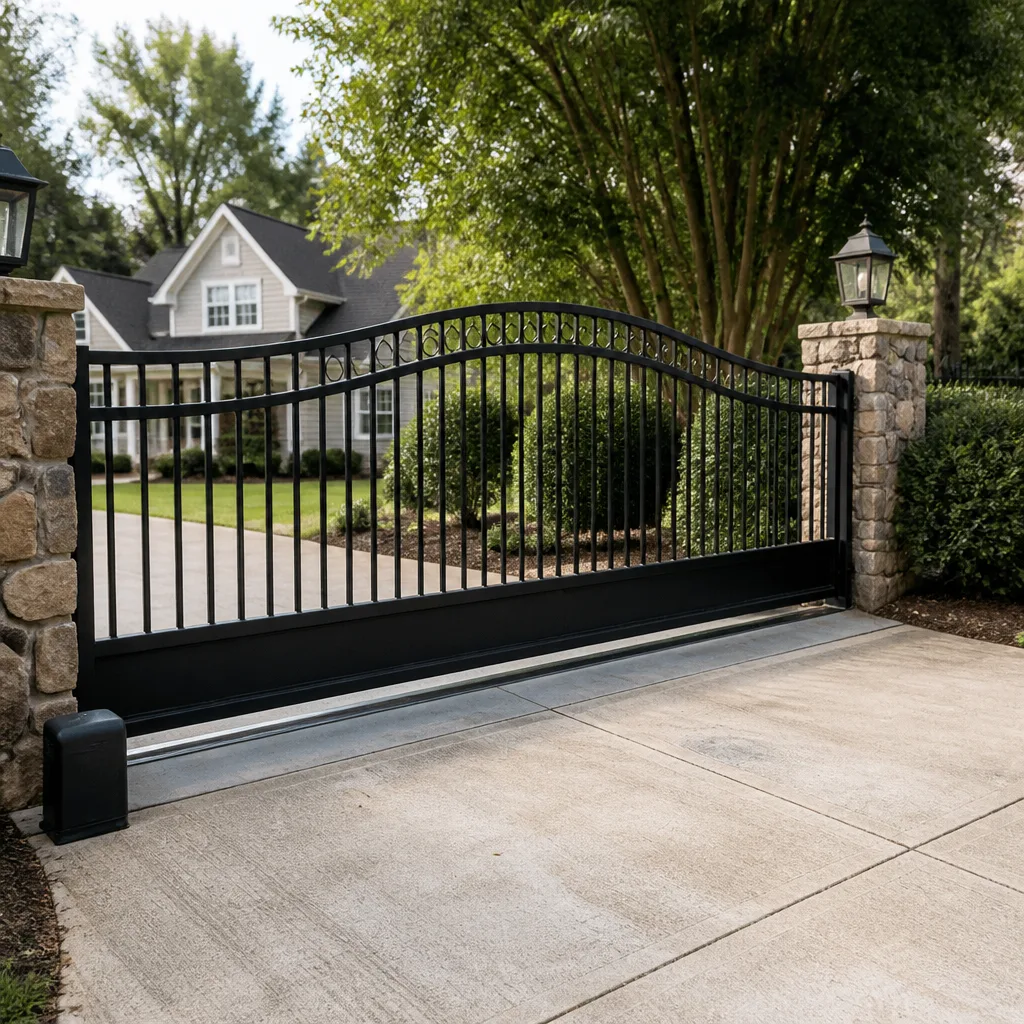 Sliding driveway gates
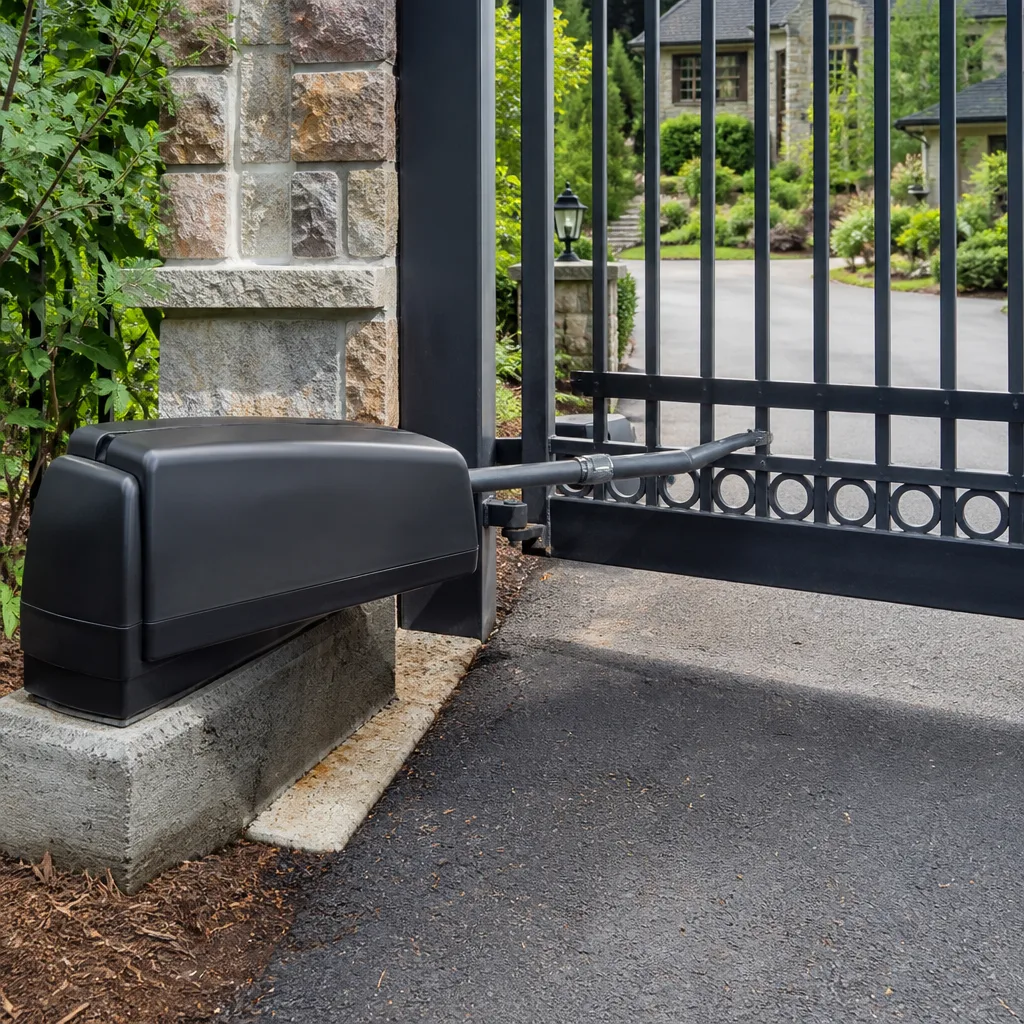 LiftMaster operators
Free on-site gate assessment - hinges, posts, and your LiftMaster or Nice gate operator checked before anything is quoted
The assessment is free and the quote is the invoice.
Get your free estimateGate Repair Permits, Codes & Inspections in CA: What You Need to Know
Here’s a fact that surprises most Corona homeowners: your automatic driveway gate is regulated more like an electrical appliance than a fence. The gate itself might never need a permit, but the moment you touch the operator, the wiring, or the safety sensors, you’ve crossed into California Building Code territory. What starts as a simple gate repair can become a title defect when you sell the house, or a denied insurance claim if something goes wrong. This guide walks through exactly where those lines are drawn, how Corona’s building department enforces them, and what you need to know before any work begins.
Styles & brands we work with
Quick Answer
Like-for-like gate repairs in California, such as replacing a hinge, a wheel, or a broken picket, generally do not require a building permit. But any work that alters the gate’s structure, replaces or adds an automatic operator, or modifies the electrical connection feeding that operator does require a permit and inspection in most jurisdictions, including Corona. Automatic gate operators must also comply with UL 325 safety standards, and failing to permit or properly install this work can affect both your insurance coverage and your ability to sell the property.
Table of Contents
- Repair vs. Alteration: Where California Draws the Line
- UL 325: The Safety Standard That Governs Every Automatic Gate
- How Corona Handles Gate Permits vs. Unincorporated Riverside County
- What Happens During a Gate Inspection and How to Pass First Visit
- The HOA Overlay: When CC&Rs Add Another Layer of Approval
- Electrical Requirements for Gate Operators in California
- What Gate Permits Cost and How Long They Take in Corona
- Common Mistakes to Avoid
- When to Call a Professional
- Frequently Asked Questions
- The Bottom Line
Repair vs. Alteration: Where California Draws the Line
The California Building Code (CBC) does not treat all gate work the same. The distinction that matters is between a repair, which restores something to its original condition, and an alteration, which changes what the gate is or how it operates. The California Residential Code, Section R105.1, requires a permit for any work that involves “the construction, enlargement, alteration, repair, movement, demolition, or change in occupancy” of a building or structure. Gates fall under this umbrella, but the practical threshold is simpler than the legal language suggests.
Here’s the working definition we use when advising clients in Corona:
- No permit needed: Replacing a bent hinge, swapping a worn wheel, welding a cracked weld, straightening a sagging gate frame, replacing a broken picket or slat, adjusting chain tension, replacing a manual latch or lock. This is like-for-like repair work that doesn’t change the gate’s footprint, height, weight, or power source.
- Permit required: Adding an automatic operator to a manual gate, replacing an existing operator with a different model or voltage, adding or relocating an electrical outlet or conduit run for the gate, changing the gate’s height or width beyond original dimensions, replacing a gate post that requires new concrete footings, installing a new gate where none existed, or converting a single swing gate to a double swing or slide gate.
The reason for this distinction comes down to safety and liability. A manual gate that fails is an inconvenience. An automatic gate that fails can crush a child, pin a vehicle, or trap someone against a column. That’s why the moment a motor and control board enter the picture, the state’s code requirements escalate. In our experience across Corona neighborhoods from Sierra del Oro to Eagle Glen, we regularly see automatic gates that were installed as DIY projects without permits, and the problems surface years later when the homeowner goes to refinance or sell. For a deeper look at what to watch for, see our Gate Repair Warning Signs: A Corona Homeowner’s Reference Guide.
One specific example: a homeowner in the Corona hills replaced a Mighty Mule operator on a ranch gate with a heavier LiftMaster commercial unit. The new operator required a 240V circuit, but the existing run was 120V. Running that new circuit without a permit technically creates unpermitted electrical work, which is the single most common red flag on a home inspection report when the property changes hands. The gate itself wasn’t the problem. The power feeding it was.
UL 325: The Safety Standard That Governs Every Automatic Gate
UL 325 is the Underwriters Laboratories standard for automatic gate operators and related safety devices. Every automatic gate sold and installed in the United States must comply with it, and California enforces this standard through the CBC and local amendments. If your gate operator doesn’t meet UL 325, the problem isn’t just a code violation. It’s an open liability case waiting for an accident.
UL 325 requires automatic gate operators to include specific safety features that prevent entrapment and crushing injuries. The standard has evolved through multiple revisions since the 1990s, and each revision tightened the requirements. Here’s what a compliant system looks like:
- Entrapment protection devices: Every automatic gate must have at least one primary and one secondary entrapment protection device. For swing gates, this typically means contact edges or photoelectric sensors. For slide gates, it means a contact edge on the leading and trailing edges plus a photoelectric beam or a second contact edge.
- Inherent obstruction sensing: The operator itself must detect when resistance increases beyond a set threshold and reverse direction. This covers the scenario where a sensor fails but the motor still needs to stop before crushing someone.
- Warning signage: UL 325 mandates specific warning signs on both sides of every automatic gate, including the familiar “Automatic Gate – Keep Clear” placards with pictograms.
- Audio alarms: For operators that close automatically via timer or sensor, an audible alarm must sound before the gate begins moving. This is a feature we check on every DoorKing and Elite system we service, because it’s frequently disabled by DIY installers.
The liability angle deserves emphasis. If an automatic gate injures someone and the operator is not UL 325 compliant, or the installation deviated from the manufacturer’s installation manual, the property owner faces a significantly harder defense in a personal injury lawsuit. Insurance carriers know this. We’ve seen cases where claims were denied because the homeowner replaced a UL 325 compliant operator with a non-compliant unit purchased from an online marketplace, and the installation never included the required secondary entrapment protection.
In Corona, inspectors look for these compliance details during gate inspections. They check sensor placement, test the obstruction response, and verify signage. A system that works mechanically but lacks the proper safety edge or photo eyes will fail inspection regardless of how smoothly it opens.
How Corona Handles Gate Permits vs. Unincorporated Riverside County
The City of Corona operates its own building department and enforces the California Building Code with local amendments. If your property sits within Corona city limits, you file your gate-related permit application with the City of Corona Building Division, either online through their permit portal or in person at City Hall on Vicentia Avenue. The process is straightforward once you understand what triggers a permit, but it differs meaningfully from what happens on unincorporated Riverside County land.
This is an important distinction for Corona-area residents, because the boundary between incorporated Corona and unincorporated Riverside County is not always obvious. Homes in areas like Home Gardens, El Cerrito, and parts of Temescal Valley fall under Riverside County’s jurisdiction, not the City of Corona’s, despite having Corona mailing addresses. Riverside County permits go through the county’s Building and Safety Department in Riverside, and their process, fees, and inspection turnaround times differ from the city’s.
City of Corona specifics:
- Permit application: Corona accepts permit applications online through its permitting system. For an automatic gate installation or operator replacement, you’ll typically need a site plan showing the gate location, property lines, and existing structures, plus the operator’s make and model and its UL 325 compliance documentation.
- Plan review: Simple gate operator replacements usually sail through over-the-counter review. New gate installations, particularly those with slide gates, often require a more detailed plan review that can take one to two weeks.
- Electrical permit: Corona requires a separate electrical permit for any new circuit, receptacle, or hardwired connection feeding a gate operator. If you’re working with a licensed electrician, they’ll typically pull this permit under their license. A qualified electric gate repair company should coordinate both the building and electrical permits so nothing gets missed.
Unincorporated Riverside County specifics:
- Permit application: County permits go through Riverside County Building and Safety. The county uses a similar site plan requirement, but they’re more particular about grading and drainage on hillside lots. Properties in the Temescal Valley corridor and the Norco Hills transition zones often have additional review layers.
- Fire department review: The county regularly routes gate applications to the local fire authority for review, particularly when the gate controls driveway access to a property that a fire engine must be able to enter. Corona’s city fire department has similar requirements, but the county process can add a week to the timeline.
- Inspection scheduling: County inspections run on a different calendar than city inspections. In our experience, county inspection windows are broader, which means a two-hour window is more realistic than a firm time, and rescheduling after a failed inspection takes longer.
If you’re not sure which jurisdiction covers your property, the fastest way to check is to look at your property tax bill. It will list either the City of Corona or Riverside County as the taxing authority. You can also call the City of Corona Building Division with your address and ask directly.
What Happens During a Gate Inspection and How to Pass First Visit
Most failed gate inspections in Corona come down to the same handful of issues. The inspector isn’t trying to fail you. They’re checking specific safety and code requirements, and if those items aren’t ready, the inspection stops, a correction notice gets issued, and you pay a reinspection fee. Here’s how to avoid that.
First, understand what the inspector will check. For an automatic gate installation or operator replacement, the typical Corona inspection covers:
- UL 325 safety devices: The inspector will test the primary and secondary entrapment protection. For a swing gate, that means the photoelectric sensors or contact edges must stop and reverse the gate under load. For a slide gate, both leading and trailing edge protection plus the secondary beam get tested.
- Operator mounting and hardware: The operator must be mounted per the manufacturer’s installation manual. Home-brew mounting brackets, shims, or improvised hardware get flagged immediately. If you’re installing a LiftMaster or DoorKing unit, the inspector expects to see the factory bracket hardware and proper torque on all fasteners.
- Electrical connection: The power feed to the operator must be on a dedicated circuit with proper disconnect means. Romex stapled to the side of a fence post is a fail. The connection point must be in an approved junction box with a weathertight cover.
- Warning signage: UL 325 requires specific signage on both sides of the gate. Missing placards are the single most common point of failure we see on residential inspections in Corona.
- Gate balance and travel limits: The inspector will check that the gate travels smoothly through its full range without binding, that open and close limits are set correctly, and that the gate doesn’t drift or sag when the operator is disengaged.
- Access control devices: If the gate includes a keypad, loop detector, or vehicle sensor, those must be UL listed and properly wired. A free-exit loop that misses vehicles because the sensitivity is set wrong is a functional failure, not just a convenience issue.
Preparation checklist before the inspector arrives:
- Test every safety device under load, not just by waving your hand past the beam. Put actual resistance against the gate edge and watch for reversal.
- Verify signage is mounted at the required heights and on both sides of the gate.
- Confirm the operator has a dedicated disconnecting means within sight of the operator.
- Have the operator’s installation manual and UL 325 compliance documentation on site. Inspectors will occasionally ask to see it.
- Clean up the work area. Debris, exposed wiring, and half-finished conduit runs signal sloppy work, and inspectors notice.
- Make sure the gate opens fully and closes fully without the operator fighting the gate. If the gate binds at any point, fix the alignment before scheduling the inspection.
A passing inspection means the work gets signed off, the permit closes, and the project is officially done. That closed permit is a document you want to keep. It’s your proof that the gate work was done to code, and it’s what a future buyer’s title company will ask for if questions come up.
The HOA Overlay: When CC&Rs Add Another Layer of Approval
Corona has a heavy concentration of HOA-governed communities. Neighborhoods like Eagle Glen, Sierra del Oro, Horsethief Canyon Ranch, and the master-planned communities along the 15 corridor all have CC&Rs that regulate what you can build, alter, or install on your property. A gate that’s perfectly compliant with city code can still violate your HOA’s architectural rules, and the HOA approval process runs parallel to the city permit process, not instead of it.
The typical sequence we recommend for Corona homeowners in HOA communities:
- Review the CC&Rs: Pull your governing documents and look for sections on exterior modifications, fences, gates, and structures. Many HOAs have specific language about gate height, style, materials, and whether automatic operators are permitted at all. Some older communities drafted CC&Rs before automatic gates were common and never updated them, which creates ambiguity you want to resolve in writing before you spend money.
- Submit the architectural request: Almost every Corona HOA requires a formal architectural application before exterior work begins. This application typically requires drawings or photos of the proposed gate, material samples, color selections, and the operator specifications. Submit this early. Some HOA architectural committees meet monthly, and the review can take 30 to 45 days.
- Get HOA approval in writing: Do not proceed on a verbal okay from a committee member. Written approval is your protection if the board changes or a neighbor files a complaint. We’ve seen cases where homeowners installed gates after a phone conversation with a board member, only to receive a cease-and-desist letter when a new board took over.
- Then file for the city permit: Once the HOA approval is in hand, proceed with the city permit application through Corona’s building department. The HOA approval letter often gets included in the permit application packet.
- Coordinate both inspections: The city inspection verifies code compliance. The HOA will also send its own inspector or architectural committee member to verify the finished gate matches the approved application. These are separate inspections with separate criteria.
The failure mode we see most often is skipping step one. A homeowner installs an automatic gate, the city passes it, and then a neighbor complains to the HOA about the operator noise or the gate’s appearance. The HOA investigates, discovers no architectural approval was ever submitted, and the homeowner is now in violation of the CC&Rs. The cure can involve modifying the gate, removing the operator, or applying retroactively, which some HOAs handle with a fine schedule. This is a fully avoidable problem, but it requires reading the governing documents before you start work.
Electrical Requirements for Gate Operators in California
Automatic gate operators are hardwired appliances. They’re not plug-and-play like a garage door opener on a wall outlet. California Electrical Code (CEC) governs every wire, conduit run, junction box, and disconnect associated with your gate, and the requirements are specific. Getting this wrong creates fire risk, and it’s the area where we see the most dangerous DIY work in Corona.
Key electrical requirements for gate operators:
- Dedicated circuit: The gate operator should be on its own circuit, not shared with landscape lighting, pool equipment, or other loads. Operators draw significant current during startup, and sharing a circuit causes breaker trips and motor failures. The circuit must be sized to the operator’s full-load amp rating with proper overcurrent protection.
- Disconnecting means: There must be a disconnect switch within sight of the operator that allows service without shutting down the whole panel. This isn’t optional. Any technician working on the gate needs to kill power at the gate, not at the garage subpanel.
- Proper wiring method: Direct burial cable must be rated for underground use and buried to the correct depth. Above-ground runs need to be in approved conduit. Bare Romex run along a fence rail is the most common violation we correct.
- Grounding and bonding: Metal gate frames and the operator housing must be properly grounded. In soil like Corona’s, which ranges from sandy loam on the flats to decomposed granite in the foothills, grounding requirements don’t change, but the installation details matter more in rocky terrain where driving grounding rods is harder.
- Low-voltage separation: The low-voltage control wiring (sensors, keypads, loop detectors) must be separated from line-voltage wiring. Mixing them in the same conduit creates interference and is a code violation.
A note on EV charger interaction: Some newer Corona homes have EV chargers that pull significant loads from the panel. If the gate operator shares a circuit or even a subpanel that’s nearing capacity, the gate can experience voltage drop when the charger kicks on, which causes stuttering or erratic operation. A specialist in electric gate repair can diagnose whether your gate’s electrical problems are actually an electrical supply problem. This isn’t a gate failure. It’s a panel capacity failure, and the solution is different.
What Gate Permits Cost and How Long They Take in Corona
Permit costs for gate work in Corona vary based on the scope of the project. The city’s fee schedule is published, but the actual cost depends on the valuation of the work, which is the combined cost of materials and labor for the permitted scope. Here’s a realistic range based on current fee structures and what we see on actual permits:
- Operator replacement permit: $110 to $280 depending on the operator’s value. This covers the building permit for the installation. A separate electrical permit for the circuit adds $80 to $200.
- New automatic gate installation: $180 to $450 for the building permit, plus $80 to $200 for the electrical permit, depending on the gate’s size, weight, and whether it’s a swing or slide gate. Slide gates with photoelectric loops and vehicle detection cost more in plan review time.
- Plan review fees: Some projects require plan review above and beyond the permit fee. This adds $100 to $250 and typically applies to new installations, particularly slide gates on hillside lots or properties with access control integration.
- Reinspection fees: If an inspection fails, Corona charges a reinspection fee, usually $85 to $150 per visit. This is the cost of not preparing properly.
Timeline expectations:
- Over-the-counter permit approval: Same day to 3 business days for simple operator replacements where the scope is clearly a like-for-like swap.
- Plan review for new installations: 1 to 3 weeks in Corona, longer during busy building seasons. Riverside County unincorporated areas run 2 to 4 weeks typically.
- Inspection scheduling: Corona typically offers inspection dates within 1 to 5 business days of your request. County inspections can take longer.
One point worth stressing: the permit cost is almost always a small fraction of the total job cost, but the protection it buys you is significant. A closed permit means the work was reviewed by the city and passed inspection. When you sell, that closed permit is worth far more than the $200 it cost. Unpermitted gate work is exactly the kind of thing that shows up in a title search and scares off buyers or triggers concessions at the closing table.
Common Mistakes to Avoid
- Skipping the permit because “it’s just a gate.” This is the most expensive mistake we see in Corona. The repair itself might be simple, but if it involves a new operator, new circuit, or structural change, the unpermitted work becomes a disclosure obligation when you sell. Title companies now routinely flag unpermitted automatic gate installations during escrow, and it costs more to legalize retroactively than it would have cost to permit correctly the first time.
- Replacing a UL 325 compliant operator with a non-compliant unit. Some online marketplaces sell gate operators that don’t meet current UL 325 standards, or they’re imported units with no UL listing at all. Installing one of these creates a liability hazard that your insurance company can use to deny a claim. Always verify the UL mark and current standard compliance before buying.
- Ignoring the HOA because the city approved the work. City approval and HOA approval are completely separate processes. In Corona’s HOA-heavy neighborhoods, skipping the architectural committee creates a violation that can result in fines or forced modification. The city won’t help you fight your HOA, and the HOA doesn’t care that the city signed off.
- Running the electrical without an electrician’s permit. The building permit for the gate is one thing. The electrical permit for the power feed is another, and it’s often overlooked. A handyman can typically pull neither permit, which means the entire job becomes unpermitted work the moment the first wire gets run.
- Mounting the operator on a gate that’s structurally inadequate. An automatic operator puts constant and repeated stress on the gate frame, hinges, and posts. A gate that works fine manually may fail catastrophically under motorized operation. If the posts wobble or the frame sags, the operator will eventually tear the gate apart. The structure needs to be sound before automation happens.
- Disabling or bypassing safety devices after installation. We see this regularly: the photo eyes nuisance-trip because they’re poorly aligned, so someone disconnects them. The gate now works “fine” but provides no entrapment protection. If an accident happens, the liability is yours, and the inspector’s first finding will be the disconnected sensors.
- Keeping the old manual gate and just bolting on an operator. Manual gates were often built lighter than automatic gates need to be. They lack the reinforcement plates, heavier hinges, and structural bracing that automatic operation requires. The operator will eventually destroy the gate, and the repair will cost more than a proper installation would have cost in the first place.
When to Call a Professional
Some gate work is genuinely DIY-appropriate: adjusting chain tension, lubricating hinges, replacing a broken picket, straightening a misaligned latch. But the moment the project involves a permit, an operator replacement, new electrical work, or UL 325 compliance, you should work with a professional who understands the code requirements and has pulled these permits in Corona before. The specific scenarios that warrant professional involvement:
- Any automatic operator installation or replacement, regardless of brand
- Any electrical work feeding the gate, including new circuits, conduit runs, or disconnect switches
- Any gate installation that requires a structural change to posts, footings, or the gate frame itself
- Any gate work in an HOA community where architectural approval is required
- Any automatic gate that fails to stop or reverse when tested against an obstruction
- Any situation where you’re not sure whether a permit is required
Baron Gate Repair offers free estimates in Corona. We’re gate specialists, not generalists, which means we look at the whole system from the motor to the hinge. If you’ve got a permit question, a gate that won’t pass inspection, or a system that needs professional gate repair in Corona, call us at (877) 752-1896. We’ll tell you honestly what needs a permit, what doesn’t, and what it’ll take to get your gate right.
Frequently Asked Questions
Yes, in most cases. Replacing an automatic gate operator requires a building permit from the City of Corona (or Riverside County, if your property is in an unincorporated area). The reason is that the operator is a UL 325 governed device with safety implications, and the city needs to inspect the installation to verify compliance. A like-for-like swap of the exact same model may be handled as a simple over-the-counter permit, but it’s still a permit.
UL 325 is the safety standard that governs automatic gate operators and their entrapment protection devices. It matters because it’s the legal baseline for gate safety in California, and operators that don’t meet it create liability exposure if someone gets injured. UL 325 requires primary and secondary entrapment protection, warning signage, and inherent obstruction sensing on every automatic gate.
Yes. HOAs in Corona have the authority to regulate exterior modifications through their CC&Rs, and most require architectural committee approval before any gate work begins. Even if the City of Corona issues a permit and passes the inspection, an HOA that never approved the gate can require modification or removal. HOA approval and city approval are separate processes that both need to happen.
Gate permits in Corona typically cost between $110 and $450 for the building permit, depending on the scope and value of the work. Electrical permits, if required, add $80 to $200. Plan review fees, if applicable, add another $100 to $250. The exact cost depends on the project’s valuation and whether it’s a simple operator replacement or a full new gate installation.
If unpermitted gate work is discovered, either through a neighbor complaint, an insurance claim, or a title search during a sale, the city can require you to legalize the work retroactively. That means applying for the permit after the fact, paying fees that often include penalties, and bringing the work up to current code if it wasn’t done correctly. If the work can’t be brought into compliance, it may need to be removed. The cost of retroactive permitting is consistently higher than just doing it right the first time.
A basic manual gate that doesn’t involve structural changes or new footings generally doesn’t require a permit. Replacing hardware, straightening the frame, fixing the latch, and similar repairs are exempt. But if you’re installing a new manual gate with new posts and footings, or you’re changing the gate’s dimensions, the city may treat it as a new structure requiring a permit.
The Bottom Line
California gate repair permit requirements aren’t as complicated as they first appear, but the stakes of getting the classification wrong are real. Like-for-like repairs stay on the no-permit side of the line. Anything that changes the gate’s structure, operator, or electrical feed crosses into permit territory, and UL 325 compliance governs every automatic system regardless of permit status. In Corona, the city and your HOA run parallel approval tracks, and skipping either one creates a problem that follows the property. The work that gets done right, permitted, and inspected is the work that never comes back to haunt you when you sell the house or file an insurance claim. For more guides & resources, explore our blog.
Written by the team at Baron Gate Repair, serving Corona since 2017.
See the difference
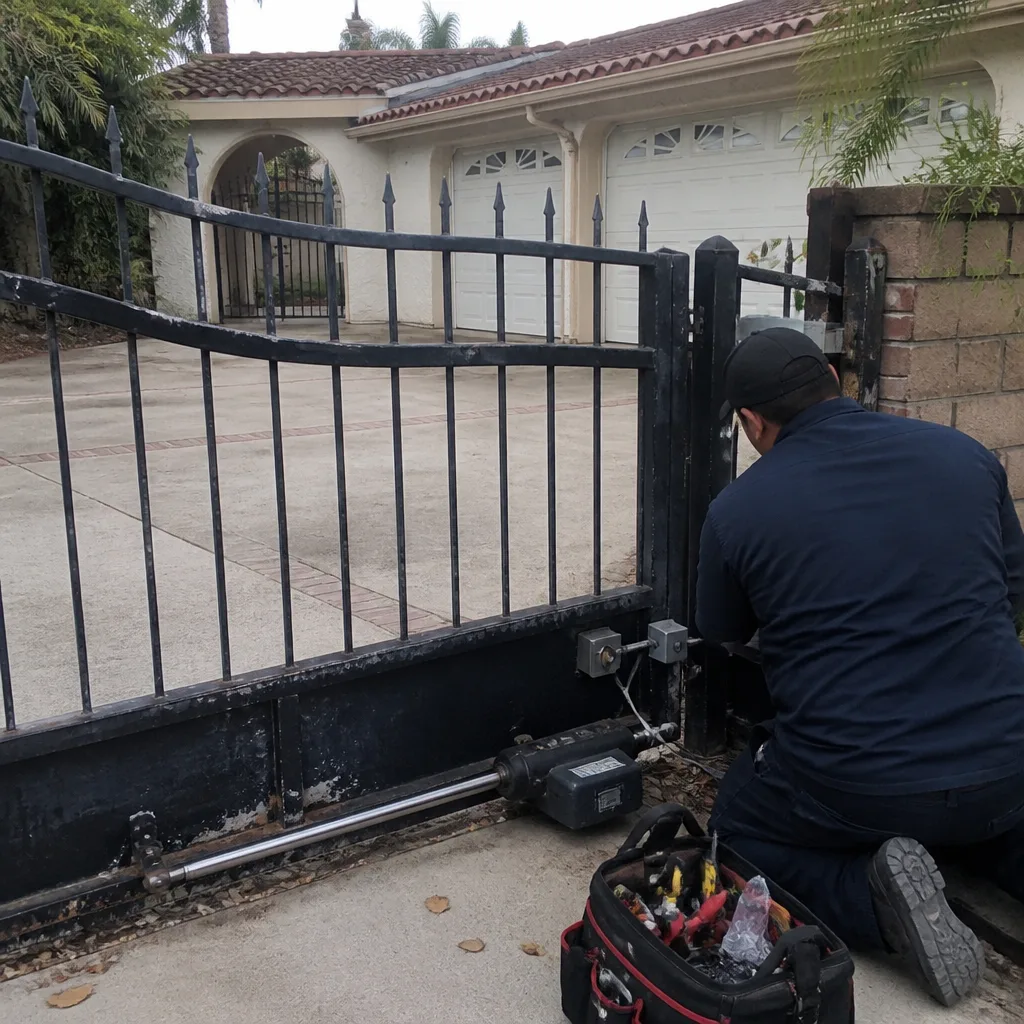
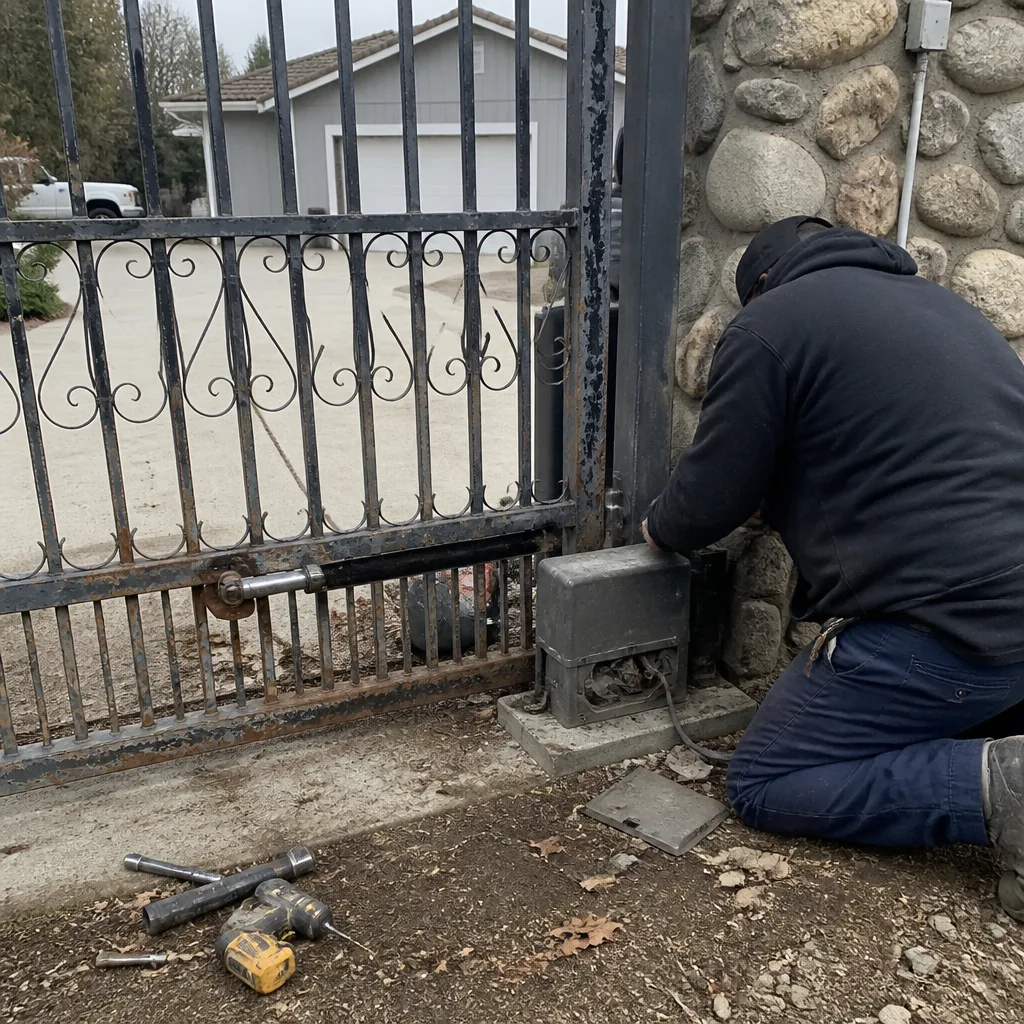
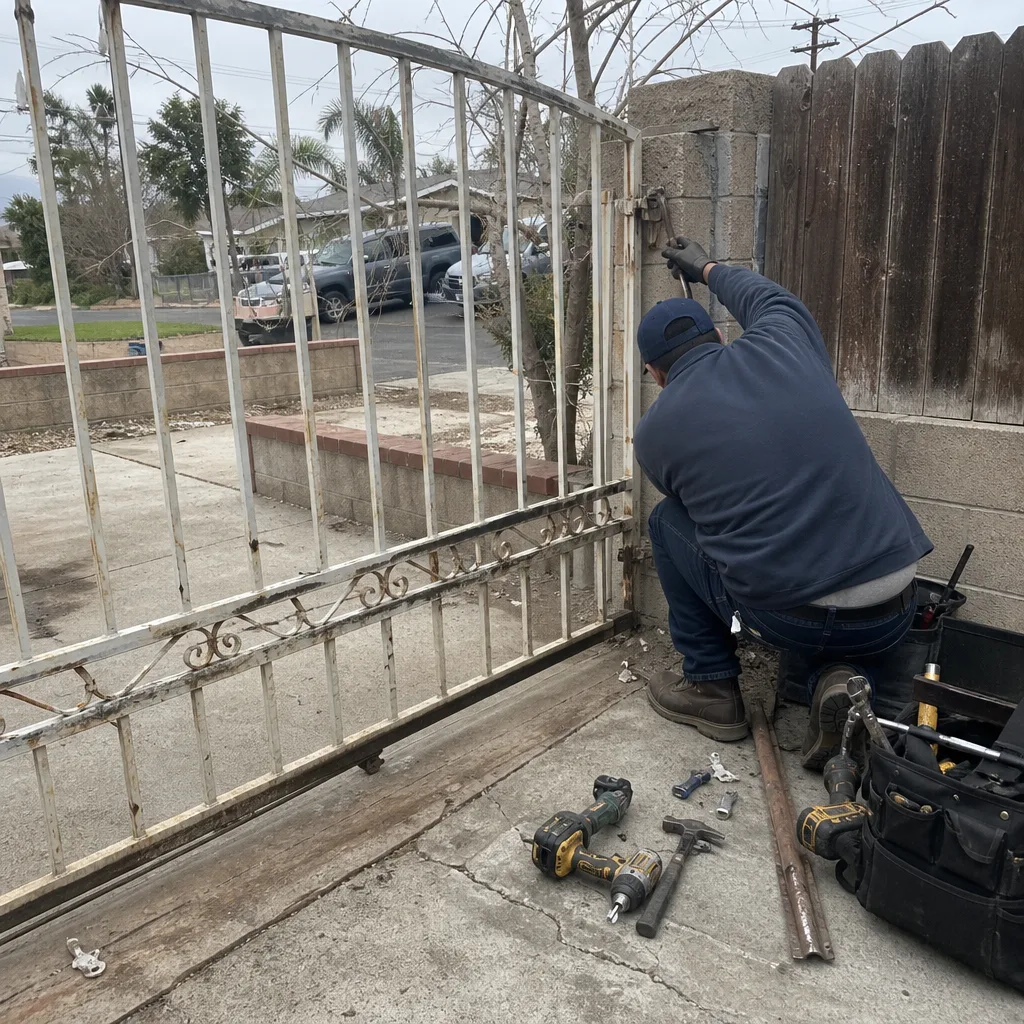 Before
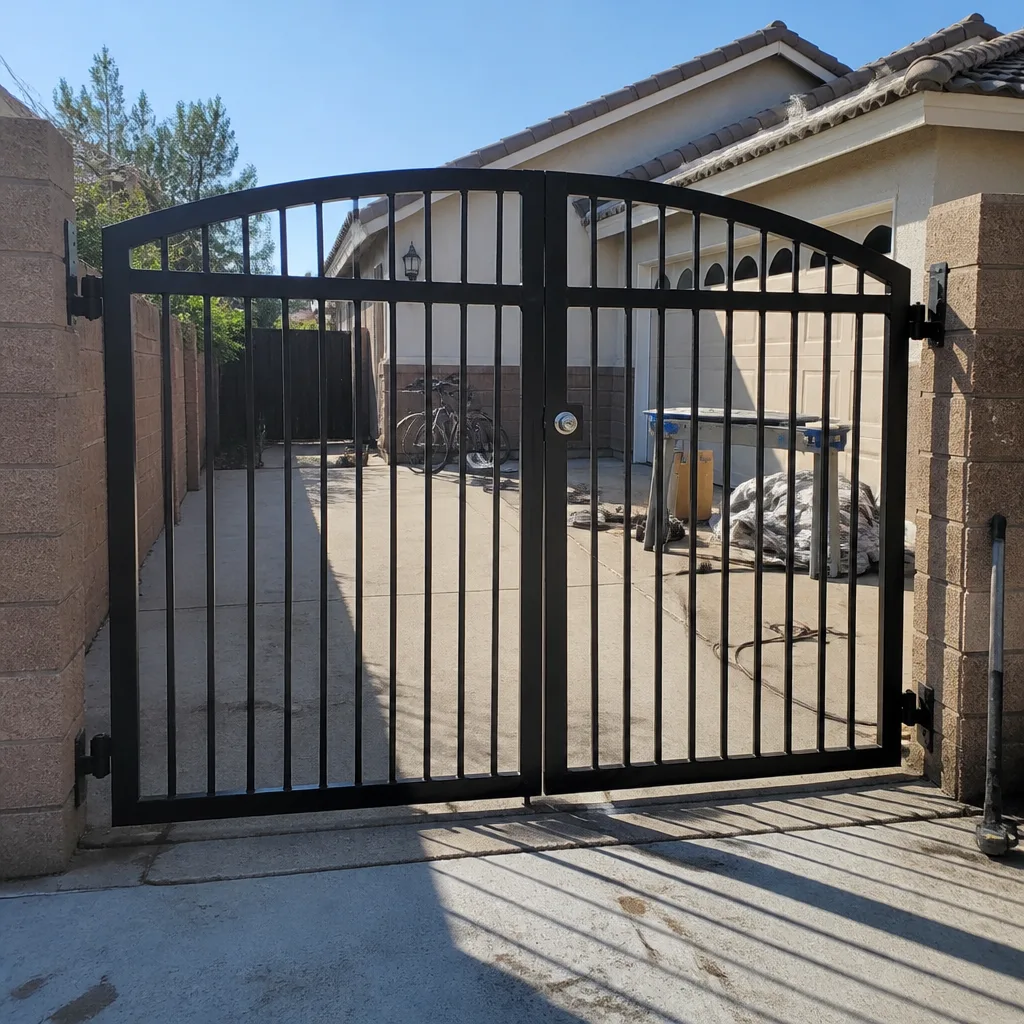
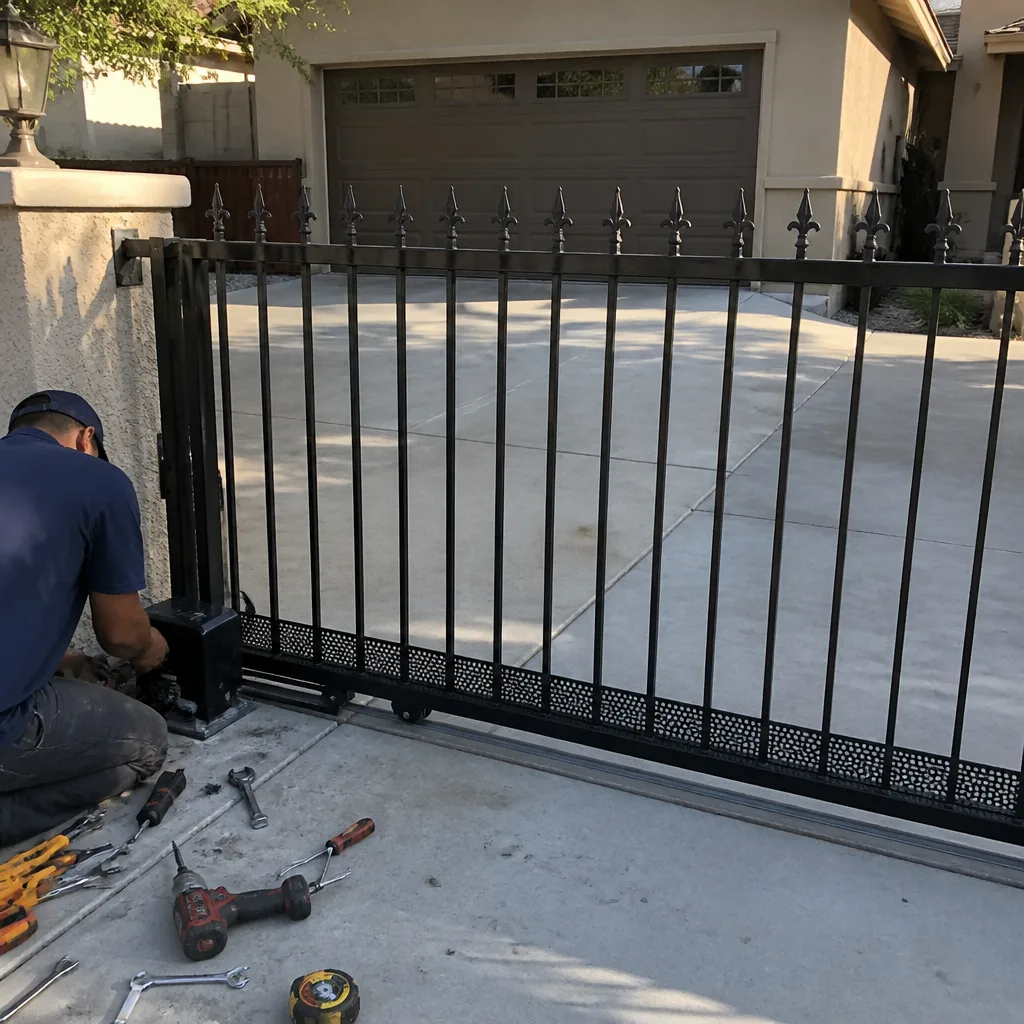
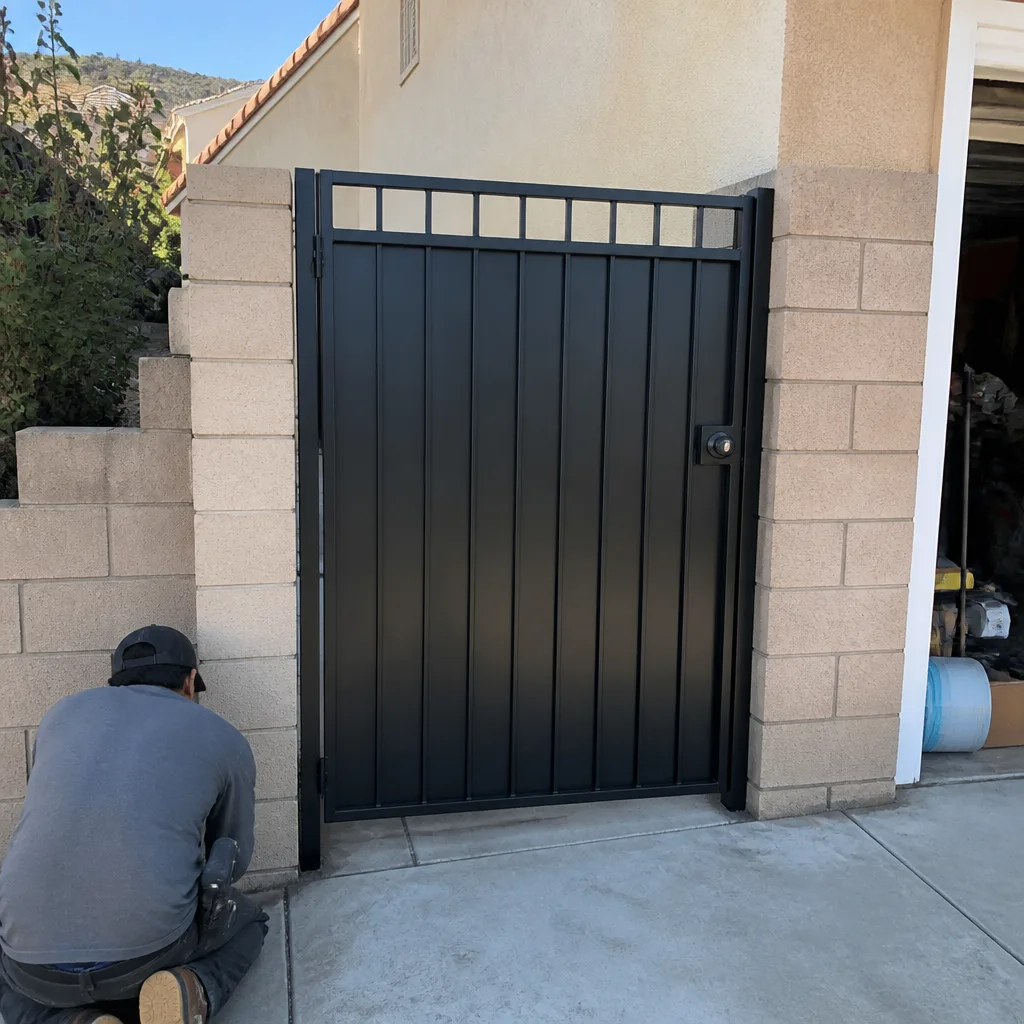 After
 Before
 After
 Before
 After