Last updated October 31, 2026
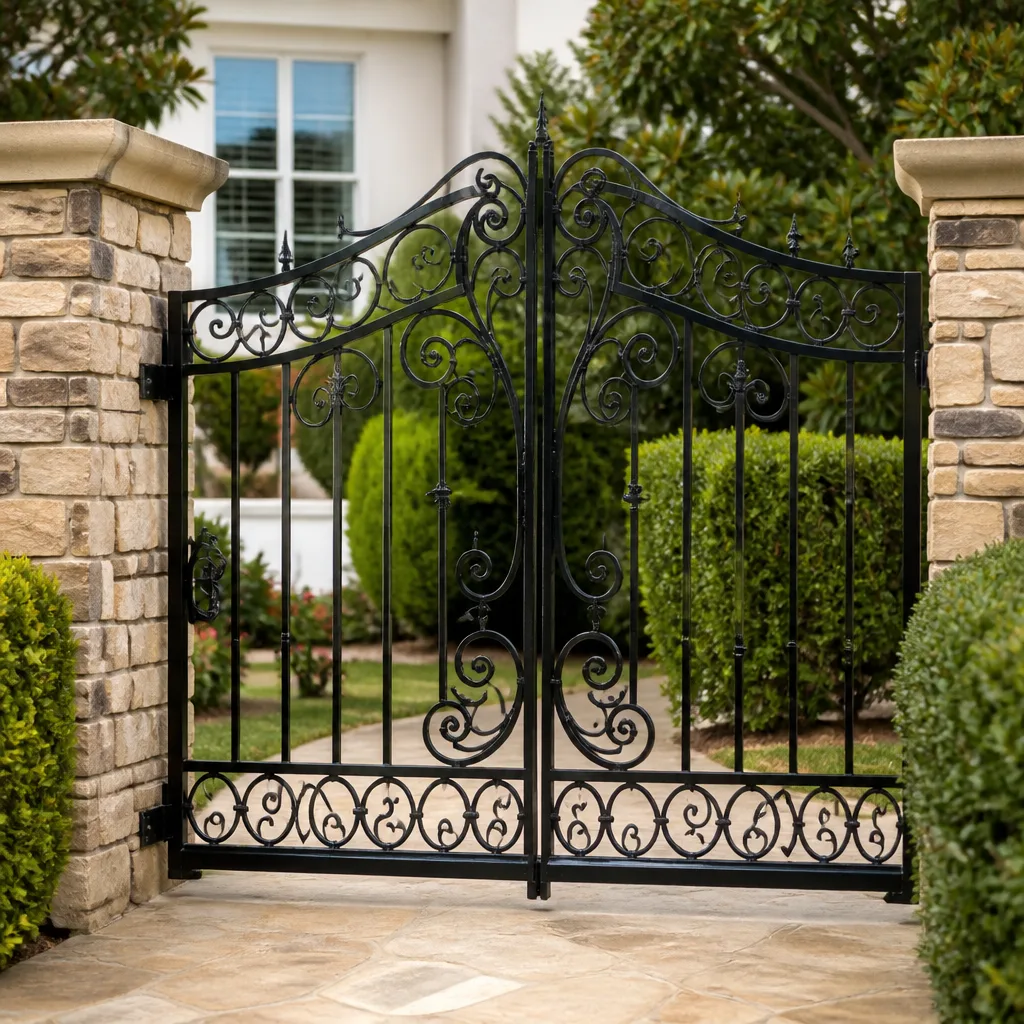 Wrought iron
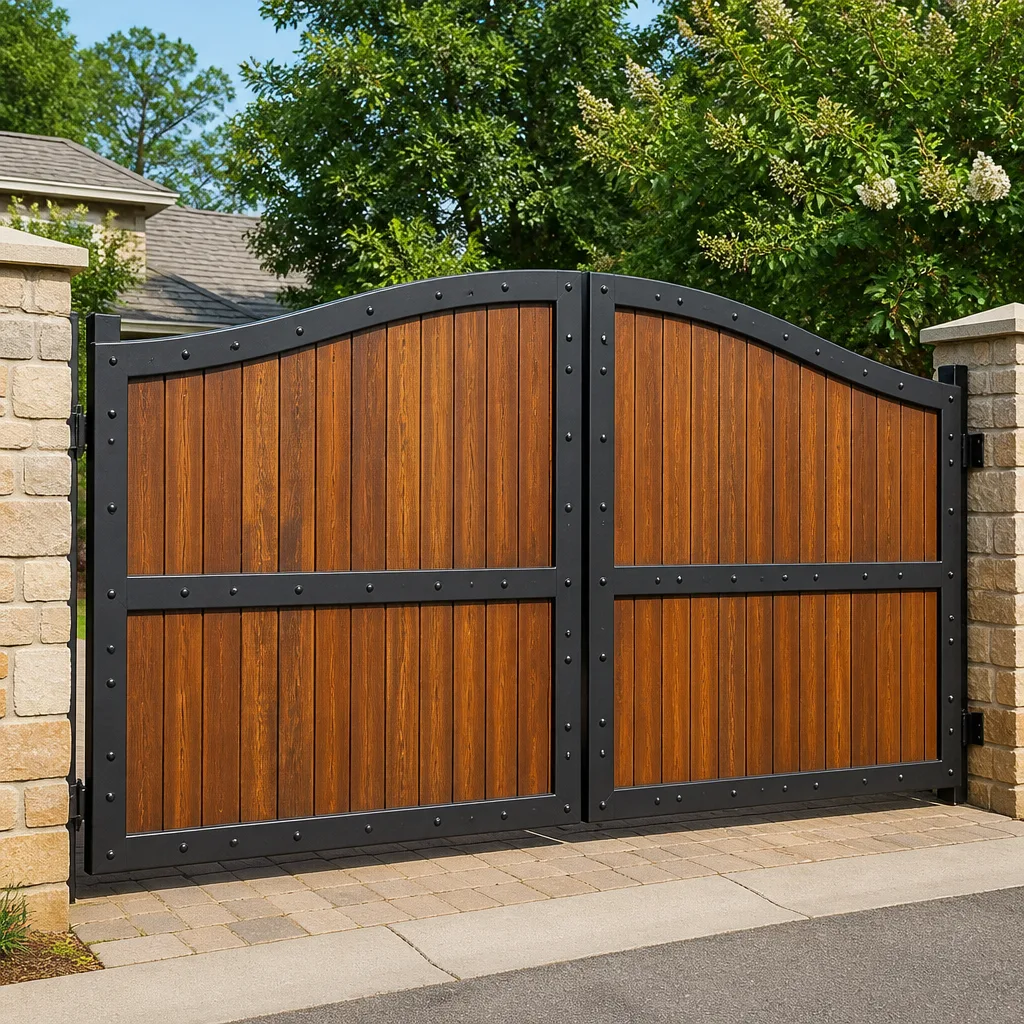 Wood & steel frame
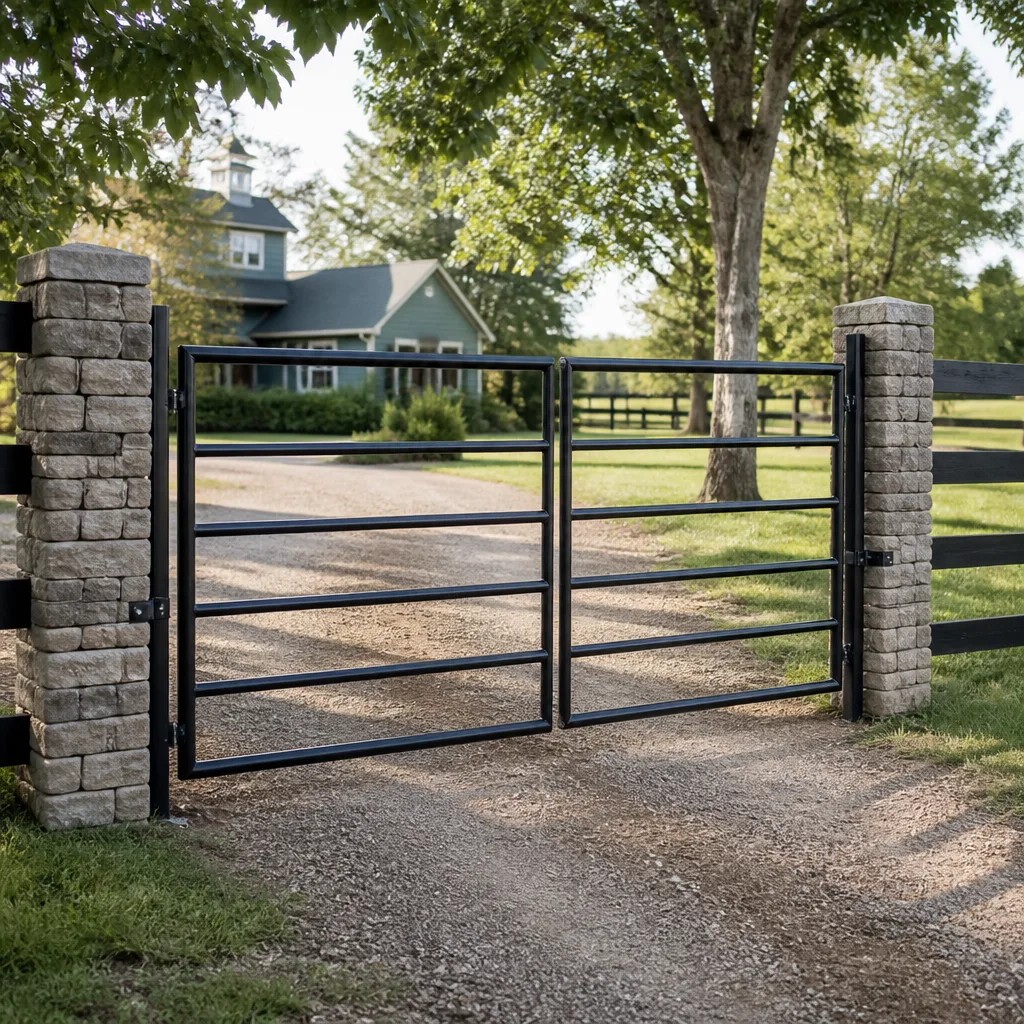 Farm & ranch
 Sliding driveway gates
 LiftMaster operators
Free on-site gate assessment - hinges, posts, and your LiftMaster or Nice gate operator checked before anything is quoted
The assessment is free and the quote is the invoice.
Get your free estimateGate Repair Warning Signs: A Corona Homeowner’s Reference Guide
A gate that hesitates for two seconds before moving isn’t “a little slow” – it’s the operator working at or near its torque limit, which means one stiff morning and it won’t open at all, usually at the worst possible moment. Most Corona homeowners replace their gate operators years after the first warning sign appeared, and they replace them because a small $40 part failed while they were waiting for a bigger problem to announce itself. This guide draws the line between symptoms that are cosmetic, symptoms that are active failure progression, and symptoms that need same-day attention in Corona. You’ll learn which sounds mean what, which visual clues indicate structural fatigue, and how to document what you’re seeing so a technician can diagnose accurately before they even arrive.
Styles & brands we work with
Quick Answer
The most common gate repair warning signs in Corona are a gate that moves slower than it did a year ago, a motor that hums for a second before engaging, hinges that creak or grind, and any visible crack or rust blister at a weld or hinge point. Slow movement means the operator is working harder than it should, which leads to motor or control board failure if ignored. A gate that reverses direction on its own, trips a breaker, or makes a grinding sound while moving needs professional attention within days, not weeks.
Table of Contents
- Symptom Severity Matrix: What Can Wait, What Can’t
- The Sounds Gates Make and What Each One Means
- Visual Indicators: Structural Fatigue vs. Surface Rust
- Electrical Symptoms: Erratic Behavior, Range Loss, and False Triggers
- How to Document Symptoms With Your Phone
- Corona-Specific Factors That Accelerate Gate Failure
- Common Mistakes to Avoid
- When to Call a Professional
- Frequently Asked Questions
- The Bottom Line
Symptom Severity Matrix: What Can Wait, What Can’t
Not every gate symptom is an emergency. Some are early warnings that give you weeks to budget and schedule. Others are active failures that will leave you unable to get your car out of the driveway or, more seriously, leave a 400-pound gate leaf hanging from a failing hinge. Here’s how we categorize what we see in Corona.
Can Wait a Month (Monitor and Schedule)
- Mild surface rust on non-structural areas: If you see light rust on a decorative element or the flat face of a steel gate panel, it’s cosmetic. Clean it and watch it. If it blisters through within 60 days, it’s not surface rust anymore.
- Slightly slower opening than when new: If your gate takes one or two extra seconds to complete its cycle, and it’s been gradual over six-plus months, you have time. But if it’s suddenly slower in the last few weeks, that moves up the list.
- Remote range reduced by 10 to 20 feet: This is often a dying battery in the remote, not the operator. Replace the battery first. If range is still reduced, the antenna or receiver may be degraded, but it’s not urgent.
- Intermittent creaking that comes and goes with weather: Corona’s dry heat and cool nights cause metal to expand and contract. A creak that appears only on cold mornings and disappears by afternoon is often thermal, not mechanical. Lubricate pivot points and monitor.
Call This Week
- Gate visibly sagging at the latch end: This means a hinge or the post itself is failing. The longer a sagging gate runs, the more it stresses every component, including the operator. A gate that’s dropped a half-inch at the latch will soon drop another half-inch.
- Motor hums for more than two seconds before the gate moves: That’s the start capacitor or motor windings laboring. The gate still works, but the operator is running at its limit. In Corona’s summer heat, that limit arrives sooner.
- Gate stops randomly mid-cycle and reverses: This is often a failing safety sensor or a control board that’s misinterpreting inputs. It’s not an emergency, but it will get worse, and it leaves the gate half-open, which defeats the purpose of having a gate.
- Any new grinding sound, even if the gate still works: Grinding means metal-on-metal contact where there shouldn’t be. It’s either a gear wearing down inside the operator or a roller, track, or hinge that’s lost lubrication and is now scoring itself.
Same-Day Attention Required (Safety Risk)
- A gate that has jumped its track or come off its roller: A 300-to-700-pound gate leaf is now being held by something other than its designed load path. This can fail catastrophically and without further warning.
- Any visible crack at a weld, hinge, or post base: Cracks in steel propagate. What looks like a hairline fracture today is a broken weld next week. If the crack is at a hinge or post base, the gate’s structural integrity is compromised right now.
- Electrical burning smell from the operator or control box: This is a short circuit, failing capacitor, or overheating transformer inside the operator. Electrical components that smell like burning are actively failing. Unplug the operator and call a professional.
- A gate that swings freely or without resistance when the operator should be holding it: This means the operator’s internal brake or worm gear has failed. The gate can be pushed open by hand, which means it’s also not secure. More importantly, a gate that moves without controlled resistance can slam and cause injury or damage.
For a broader look at what repair work looks like in Corona, see our Gate Repair in Corona page.
The Sounds Gates Make and What Each One Means
Gates talk. Most homeowners just don’t know the language. After years of diagnosing gate failures across Corona, from the flat lots near Dos Lagos to the hillside properties in Sierra del Oro, here’s what each sound tells us.
Grinding
Grinding is always metal-on-metal contact. The most common source on a sliding gate is a roller bearing that’s seized and is now being dragged along the track, which scores both the roller and the rail. On a swing gate, grinding usually comes from a hinge that’s run dry, or from inside the operator where a worm gear has lost lubrication and is chewing into its mating gear. Grinding never resolves on its own. Every cycle makes it worse, and the repair cost climbs with every week you ignore it because the damaged part is now damaging whatever it touches.
Clicking (Repeated, Rhythmic)
A rapid clicking sound when the gate tries to move, but the gate doesn’t actually go anywhere, is the sound of the operator’s internal relay or contactor cycling without enough power to turn the motor. On many LiftMaster and Linear residential operators, this is a failed start capacitor. The control board is sending the “go” signal, the relay closes, but the motor can’t turn over, so the relay opens again. It sounds like a machine gun, and it means the operator is about to be a paperweight. Clicking that happens only once when you press the remote is normal; that’s the relay engaging. It’s the repeated, rhythmic clicking that signals failure.
Squealing or Screeching
A high-pitched squeal that starts when the gate starts moving and stops when it stops is almost always a drive belt slipping on a pulley, or a chain that’s loose and sliding across a sprocket tooth. The sound is like a car’s serpentine belt before it snaps. In Corona’s dry, dusty conditions, belt-driven operators from FAAC and BFT picks up fine grit that accelerates belt wear. A squealing belt is a simple fix; a snapped belt on a heavy gate is a bigger job because the gate may have to be manually released and re-positioned.
Low Hum (Motor Running, Gate Not Moving)
A low-pitched hum with no movement is the sound of a motor getting power but not turning. The most common cause is a seized gearbox or a failed start capacitor that’s letting the motor windings energize but not produce rotation. Left alone, that hum becomes a smell, then a pop, and then a dead operator. If you hear this sound and smell anything warm or electrical, unplug the operator. If the gate is mid-cycle, do not try to force it closed by hand; the operator may still be under load.
Slamming or Banging at the End of Travel
A loud slam or bang when the gate reaches its fully open or fully closed position means the limit switches or soft-stop settings have drifted or failed. The operator no longer knows where the gate is. It’s running at full power all the way to the end of its travel and hitting the physical stop. Beyond the noise, the impact stresses every weld and fastener on the gate. If your operator has an app or control panel, check the limit settings. If they won’t hold, that’s a control board issue.
If you have an electric gate making any of these sounds, our Electric Gate Repair in Corona page explains how we diagnose and fix them.
Visual Indicators: Structural Fatigue vs. Surface Rust
You don’t need to be an engineer to spot the difference between surface rust and structural fatigue. The difference matters because one is cosmetic and the other is a countdown to a very expensive repair. Here’s how to tell from ground level.
Surface Rust: What It Looks Like
Surface rust looks like a flat, even orange-brown discoloration. It’s on the face of panels, on decorative finials, or along the bottom rail where sprinkler overspray hits. It doesn’t flake in thick sheets, it doesn’t create sharp edges, and it doesn’t change the shape of the metal. In Corona’s climate, surface rust is rare on powder-coated gates but common on older, painted steel gates where the paint has worn thin. It’s unsightly, but the gate is not in danger.
Structural Fatigue: What It Looks Like
Structural fatigue shows up at specific points, and it almost never looks like a flat stain. Look for these patterns:
- Rust blisters or flaking, layered rust at a weld joint: When rust forms in layers that crumble or flake away like old paint, it’s not surface rust. That rust is growing into the metal, and it’s eating the weld. A weld that’s rusting from the inside out will eventually crack.
- Hairline cracks radiating from a weld, hinge, or bolt hole: A crack is the clearest structural symptom there is. Paint often hides cracks, so look for a line in the paint that follows a weld bead. Run a finger along the weld; if you feel a sharp edge, that’s a crack that’s already opened.
- A post that’s leaning, even slightly: Gate posts carry the entire weight of the gate leaf plus the dynamic load of every open and close cycle. If you see a gap opening between the post base and the concrete footing, or the post itself tilts toward the gate, the foundation or the post is failing. This is same-day attention territory.
- Elongated or oval-shaped bolt holes: Bolts that sit in stretched, oval holes instead of round holes are telling you the gate has been moving in ways it shouldn’t. Something is loose or misaligned, and every cycle is wallowing the hole out further.
The Ground-Level Test
The easiest way to separate surface rust from structural fatigue is to tap the area with a screwdriver handle or a hard object. Surface rust sounds solid. Structurally compromised metal sounds dull or hollow, and flakes of rust will fall out of the joint. If you’re not sure, take a photo and zoom in. Cracks and delamination show up clearly in a well-lit close-up.
Electrical Symptoms: Erratic Behavior, Range Loss, and False Triggers
Electrical gate symptoms are where general repairers go wrong. A handyman who’s comfortable with hinges and tracks will see a gate that opens on its own and start replacing parts at random. The actual cause is usually specific and diagnosable. Here’s what the symptoms mean.
Erratic Behavior: Opening on Its Own, Stopping Mid-Cycle, Reversing Randomly
A gate that opens or closes without anyone pressing a button is receiving a signal from somewhere. The most common sources are:
- A failing loop detector: If your gate has an in-ground loop detector for exit or entry, a damaged loop or a detector that’s drifting out of calibration can send phantom signals. The gate thinks a car is present when there isn’t one.
- Electromagnetic interference: In Corona, homes near high-voltage transmission lines or industrial equipment can experience interference that triggers the gate’s receiver. This is less common than loop detector failure but happens often enough that we check for it.
- A stuck button on a remote or keypad: Before you call anyone, take the batteries out of all remotes and unplug the keypad. If the erratic behavior stops, the problem is in one of those devices.
- A failing control board: On older FAAC and BFT control boards, capacitors dry out over years of Corona heat, and the board starts misinterpreting its own inputs. This is a board-level diagnosis, not a parts-swapping exercise.
Remote Range Loss
If your remote used to work from 80 feet and now only works from 20, the most common cause is not the remote itself. It’s the antenna or receiver inside the operator. On many residential operators, the antenna is a short wire that can corrode, break, or get pinched inside the housing. Before you pay for a new remote, check the antenna. On LiftMaster and Linear operators, the antenna is often visible as a short, stiff wire extending from the control box. If it’s bent, corroded, or detached, that’s your range problem.
A second cause is RF interference from devices that have appeared since the gate was installed. New LED lighting, a new smart-home hub, or a neighbor’s new security system can all broadcast on frequencies that interfere with gate remotes. If your range loss coincided with a new device in your home, unplug it and test the gate.
Sensor False-Triggers: Gate Reverses When Nothing Is There
Safety sensors on automated gates use either a photo eye (an infrared beam) or an in-ground loop. When a photo eye misaligns, gets dirty, or is shaded in a way that tricks it, the gate will reverse mid-cycle because it thinks something is in the path. Corona’s dust and intense sunlight are frequent culprits. A photo eye that worked perfectly in June may false-trigger in August when dust accumulates on the lens and sunlight hits it at a different angle. Cleaning and realigning the eye fixes most false-trigger cases. If the problem persists, the eye or its wiring is failing.
For control board, loop detector, and safety sensor issues specifically, our Electric Gate Repair in Corona page covers what we see most often.
How to Document Symptoms With Your Phone
Here’s a fact that surprises most homeowners: the more accurately you document a symptom before calling a technician, the less you pay. A Corona gate technician can diagnose many failures from a 20-second video and a few photos, which often means a single trip instead of a diagnostic visit plus a follow-up repair visit. Here’s how to document what you’re seeing.
- Record video with sound, from a static position: Set your phone on something stable or hold it steady. Film the gate for one full open and close cycle. The sound is just as important as the image. A technician can hear a failing capacitor or a dry hinge on a phone video.
- Film from the side that shows the gate’s connection to the post: Many symptoms are visible at the hinge or roller, not at the gate’s center. A close-up of the hinge while the gate moves reveals play, wear, and stress that’s invisible from the front.
- Take close-up photos of anything suspicious: Rust blisters, cracks, loose bolts, sagging corners, and the operator’s model number are all worth photographing. The model number is particularly valuable because it lets a technician bring the right parts on the first trip.
- Note when the symptom happens: Does the gate bind only in the morning when it’s cool? Only in the afternoon when it’s hot? Only after rain? Corona’s temperature swings affect gate components, and knowing whether a symptom is temperature-dependent helps isolate the cause.
- Check the breaker and note any recent electrical changes: If the gate shares a circuit with something new, like a pool pump or an AC unit, note that. Sharing a circuit is a common source of operator behavior that looks like a mechanical failure.
Three minutes of documentation before you call can save a second service trip. When you call our office, we can often give you a preliminary diagnosis over the phone based on what you describe and what you send.
Corona-Specific Factors That Accelerate Gate Failure
Corona’s climate and geography create a specific set of stressors on gates. Understanding these helps you anticipate problems before they become emergencies.
Heat and UV exposure: Corona’s summer temperatures regularly exceed 95°F, and direct sun on a steel gate can push the metal surface temperature above 140°F. Powder-coated finishes fade and chalk under sustained UV. More importantly, the operator’s internal electronics run hotter. Capacitors, which are the most common failure point on residential operators, age faster in heat. An operator that would last 8 years in a coastal climate might last 5 in Corona’s inland heat. If your operator is mounted on a south-facing or west-facing pedestal, it’s running hotter than the manufacturer’s rated ambient temperature on most summer afternoons.
Santa Ana winds: Corona sits in a wind corridor, and Santa Ana events can gust a 12-foot gate leaf with serious force. A gate that’s slightly out of balance operates under additional load during wind events, and operators are not designed to fight sustained wind pressure. If your gate has a large solid panel and no wind relief, every Santa Ana event is stressing the operator’s gears and motor windings.
Dust and fine particulates: The drier, dustier air in Corona compared to coastal Orange County means that lubricants pick up grit faster. Grease that would stay clean for a year in Newport Beach might be contaminated in three months in Corona. Contaminated grease becomes a lapping compound, accelerating wear on hinges and roller bearings.
Hard water and sprinkler overspray: Corona’s water is hard, and sprinkler overspray hitting a steel gate leaves mineral deposits that hold moisture against the metal. That’s a rust accelerant. Gates along walls with irrigation, or near planters with drip systems that mist, rust faster than gates in dry areas. If your gate shows rust near the bottom rail, check where your sprinklers are aimed.
For homeowners dealing with these climate-related failures, our Gate Repair in Corona page explains what we see on the job and how we approach repairs.
Common Mistakes to Avoid
- Ignoring slow operation because “it still works”: A gate that’s slowed down is a gate whose operator is running at or beyond its designed load. The failure isn’t gradual; it’s a sudden stop the day the motor finally gives out. If it’s slower than it was six months ago, that’s a repair indicator, not a personality trait.
- Lubricating everything without cleaning first: Spraying fresh lubricant over dirty, gritty grease just thins the old grease and lets it carry grit deeper into the bearing. Clean the pivot point first, then lubricate with the correct product. WD-40 is not a lubricant for gate hinges; it’s a solvent.
- Adjusting the limits or force settings to “compensate” for a failing component: When a gate starts binding, some homeowners or general handymen turn up the force setting so the gate pushes harder. That doesn’t fix the binding; it overstresses the operator and turns a hinge replacement into an operator replacement.
- Assuming the remote is the problem when range drops: We covered this above, but it bears repeating. Remote range loss is more often the antenna, the receiver, or RF interference than the remote itself. Before you buy a new remote, check the simple things.
- Welding a cracked hinge without addressing why it cracked: A crack at a hinge means that hinge was overloaded, misaligned, or the gate is out of balance. Welding the crack without fixing the cause just means the crack will reappear next to the weld. You need to find why the hinge failed, not just patch the metal.
- Putting off a sagging gate because “it’s been like that for a while”: A sagging gate is a failing gate. It won’t get better, and the longer it sags, the more it wears the hinges, the post, and the operator. By the time a sagging gate finally fails, you’re usually looking at a much bigger repair than the original hinge or post issue.
- Calling a general handyman for an electrical gate problem: Electric gate operators have control boards, safety sensors, loop detectors, and force-adjustment logic. A tradesperson who doesn’t know the difference between a BFT board and a LiftMaster board can’t diagnose accurately, and you’ll pay for their learning curve in repeat visits.
When to Call a Professional
If your gate is making any sound it didn’t make a month ago, moving slower than it did a year ago, showing any crack or rust blister at a weld or hinge, sagging at the latch end, or behaving erratically with no clear cause from a stuck remote button or dead battery, call a gate specialist. These symptoms don’t self-correct, and every cycle you run the gate while a symptom is present makes the eventual repair more expensive. If you smell anything electrical from the operator, unplug it and call immediately. If the gate has come off its track or a hinge is visibly failing, secure the area and call now. Baron Gate Repair offers free estimates in Corona – call (877) 752-1896. For information on new gate installations or replacing a failed system, see our Gate Installation in Corona page.
Frequently Asked Questions
Gate repair in Corona typically ranges from $150 to $600 for most mechanical and electrical fixes, depending on whether the failure is a part replacement like a hinge or roller, or a component replacement like a capacitor, control board, or safety sensor. Full operator replacement runs higher. The price is quoted and agreed before any work starts, so you’ll know the cost before we turn a wrench. Call (877) 752-1896 for an exact quote – estimates are free.
For mechanical failures and many electrical issues, yes, same-day or next-day service in Corona is usually possible. If we’re replacing a control board or a specific operator component that isn’t on the truck, we may need to order a part, but most common failures are repairable on the first visit. The fastest way to know is to call (877) 752-1896 and describe the symptom.
Almost certainly not. Remotes fail uniformly. If range varies by location, the issue is almost always the antenna or receiver on the operator, or RF interference from a device between the house and the gate. Check the operator’s antenna for corrosion or damage, and note any new electronics installed near the gate or the house in recent weeks. If the antenna looks intact and you haven’t added new devices, call us and we’ll trace the signal path.
A gate that reverses mid-cycle is responding to a false signal from its safety sensor, and the most common cause is a dirty or misaligned photo eye. Corona’s dust and strong sunlight can coat the lens or shift the alignment just enough to trick the eye. Clean the lens, check the alignment, and test again. If it still false-triggers, the eye or its wiring may be failing, and that’s a straightforward replacement.
We work on the brand you already have. That includes LiftMaster, FAAC, BFT, Linear, Viking, Ghost Controls, DoorKing, Elite, and Mighty Mule – from DIY-grade ranch gate openers to commercial access-control systems. We’re gate specialists, not generalists, so we see the full spectrum of brands every week and diagnose each one accurately the first time.
A sagging gate is a structural problem that’s actively worsening. The sag means a hinge, a post, or the gate frame itself is under load it was never designed to carry. Every open and close cycle makes it worse, and the longer it runs, the more collateral damage it does to the operator and the other hinges. If your gate has dropped even half an inch at the latch end, schedule a repair this week. This is not a wait-and-see situation.
The Bottom Line
Gates fail with warning. The slow operation, the new sound, the rust blister at the weld – these aren’t quirks, they’re your gate telling you what’s happening inside. The difference between a $40 hinge replacement and a $1,500 operator replacement is usually just how long the symptom was allowed to run. In Corona’s heat, wind, and dust, gates work hard, and the components that fail first are the ones under the most load: hinges, rollers, capacitors, and safety sensors. Learn the sounds, check the visual indicators, document what you see, and call a specialist when a symptom appears. If you’re seeing any of the warning signs in this guide, call Baron Gate Repair at (877) 752-1896 for a free estimate – we’ll diagnose what’s wrong and quote the repair before any work begins.
Written by the team at Baron Gate Repair home, serving Corona since 2017.
See the difference
 Before
 After
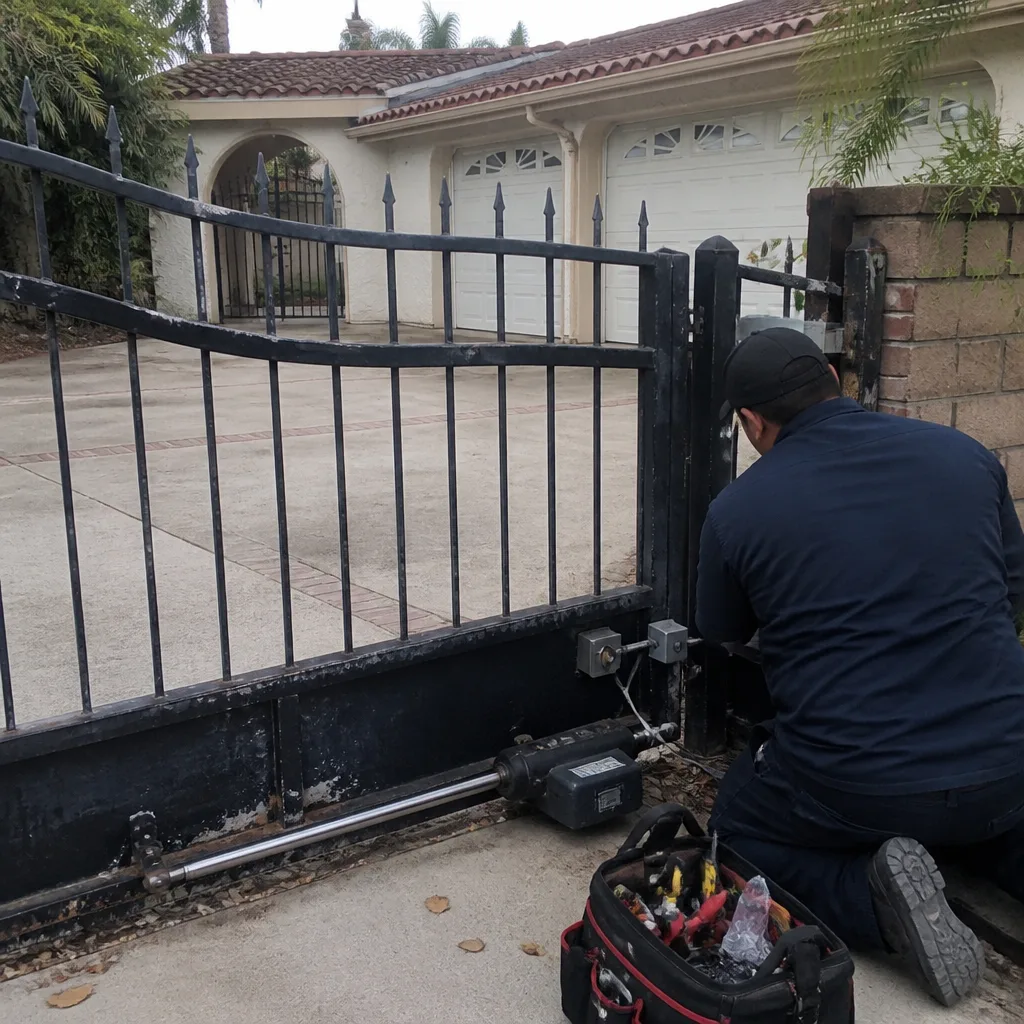 Before
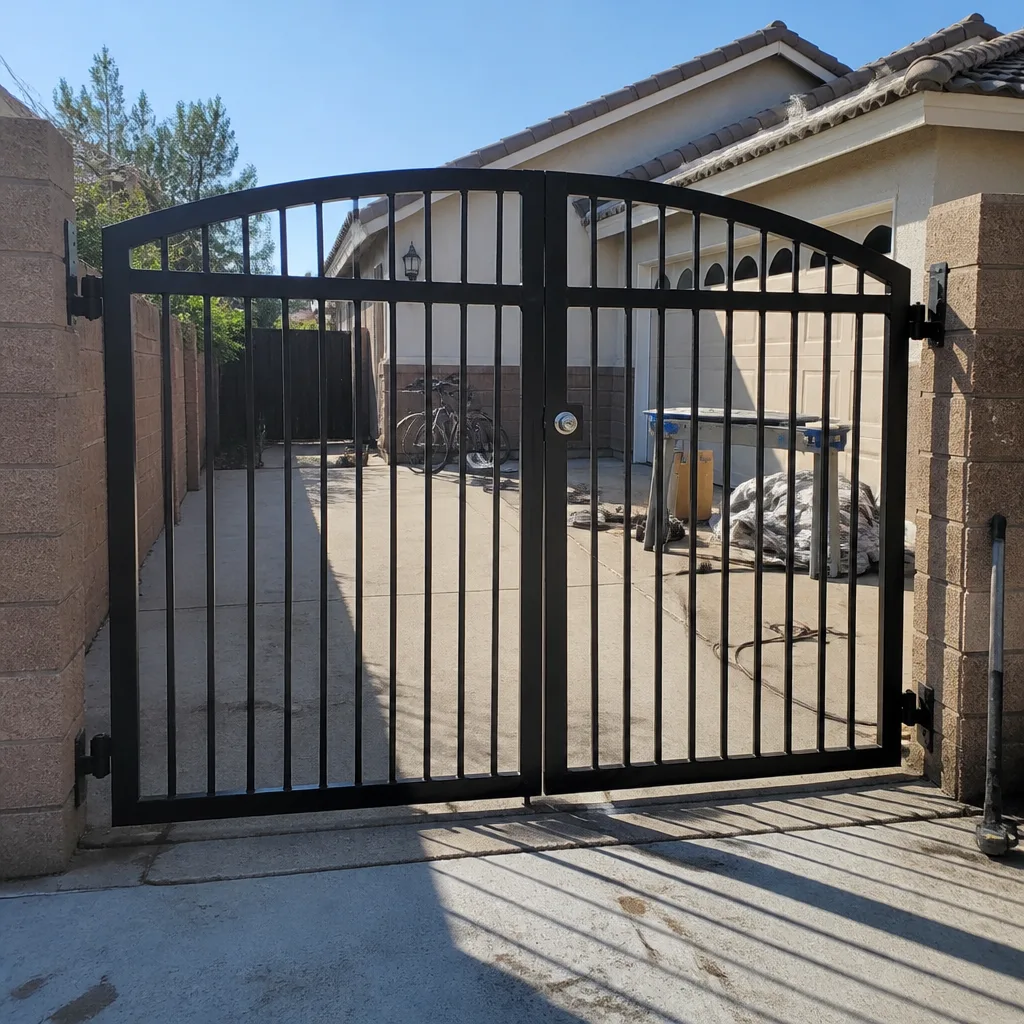 After
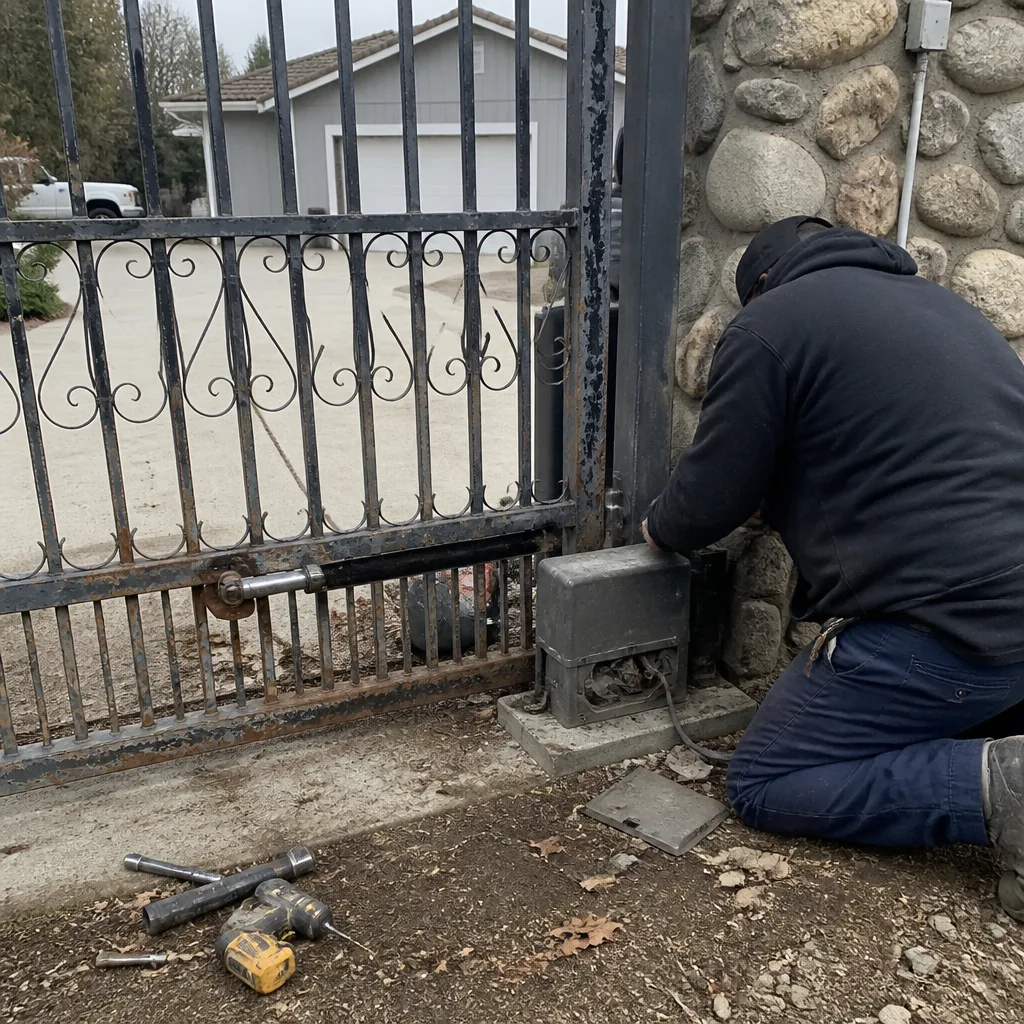 Before
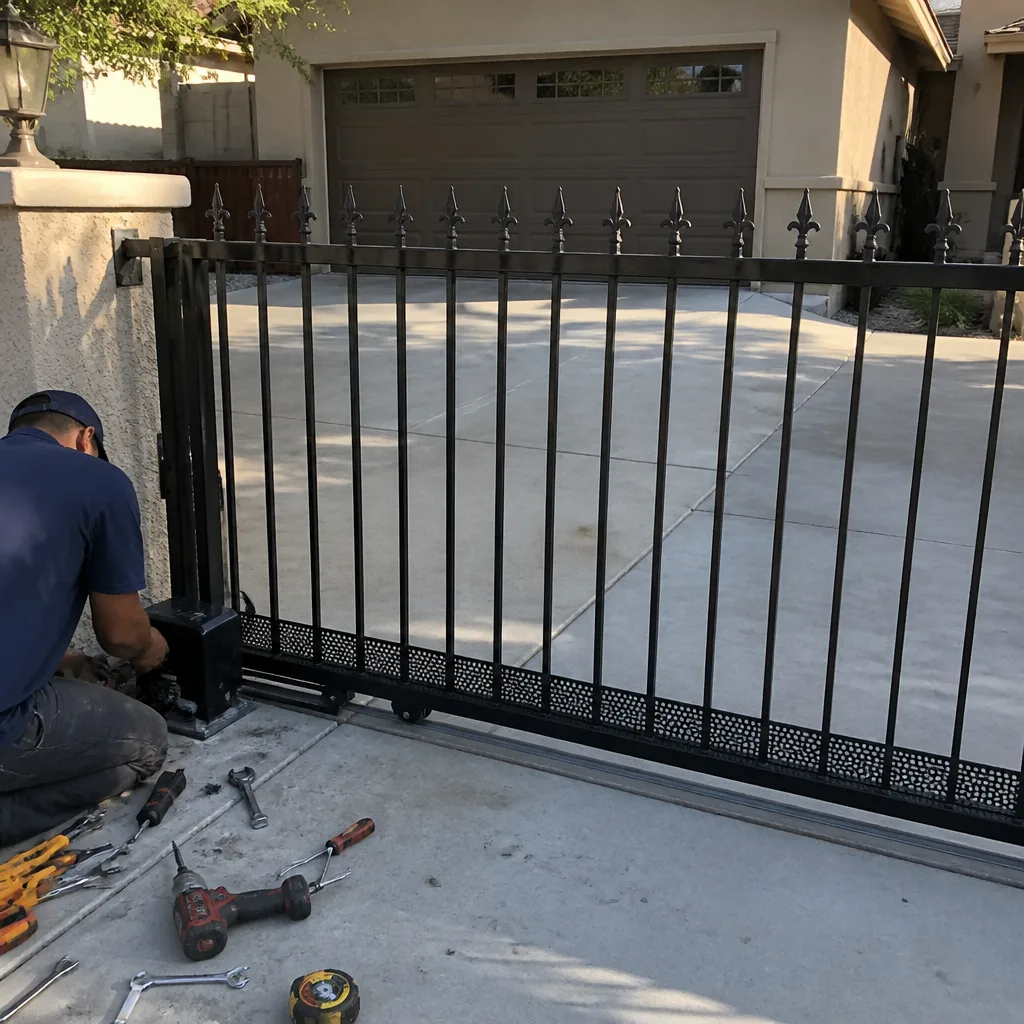 After